
Marketing Funnel Stages That Actually Move Prospects
Last updated November 15, 2026
Marketing funnel stages describe the path a prospect takes from first learning about your business to becoming a loyal customer. The traditional stages are awareness, interest, desire, and action, but modern funnels add loyalty and advocacy to capture the full customer lifetime value.
Table of contents
- What Marketing Funnel Stages Actually Mean
- Top of Funnel: Awareness Stage
- Middle of Funnel: Interest and Consideration
- Bottom of Funnel: Conversion and Action
- Post Purchase: Loyalty and Advocacy
- How Marketing Information Management Tracks Movement Between Stages
- Building Your Funnel Without An Agency
- Frequently asked questions
What Marketing Funnel Stages Actually Mean
The traditional funnel is awareness, interest, desire, and action (AIDA), a model Elias St. Elmo Lewis developed at the turn of the 20th century. Over time, the AIDA model was combined with the funnel shape, giving us the metaphor we still use today: lots of people enter at the top, fewer make it to the bottom where they buy.
Modern funnels extend beyond the purchase to include loyalty and advocacy stages. This forms what many now call the hourglass model, where customers widen back out as they refer others and buy again. The funnel stopped being about one sale and started being about lifetime value.
The stages aren't passive steps on a diagram. They represent actual business systems that either run automatically or leak revenue when ignored. Understanding the stages helps you diagnose where prospects are dropping off, which is almost always a bigger problem than getting more traffic at the top. We see business owners pour thousands into ads to generate calls they never answer, send traffic to landing pages with no follow up, and lose one-time buyers who would've purchased again if anyone had asked.
Plug the leaks first: Most business owners think they have a traffic problem. In almost every case they have a leak problem. Adding traffic to a leaking bucket just makes the leak more expensive.
Most owners stack up disconnected tools trying to manage these stages: a scheduler, an email tool, a text tool, a funnel builder, a review tool, and a CRM that none of the others talk to. They aren't overspending on marketing. They're overspending on duct tape.
Top of Funnel: Awareness Stage
ToFu (Top of Funnel) is where prospects first learn they have a problem and discover that your business exists.
This stage includes SEO, ads, social media, content marketing, and any channel that puts your name in front of someone who's never heard of you. Most businesses measure this stage by impressions, reach, website traffic, and the size of the cold audience seeing the brand for the first time. The awareness stage isn't about selling. It's about building trust and establishing that you understand the problem before you ever pitch the solution.
Launch Data identifies anonymous website visitors in the Awareness stage and turns them into contactable leads with enriched profiles that flow straight into your CRM. Someone lands on your site, reads a blog post or browses a service page, and leaves without filling out a form. Most businesses call that a lost visitor. Launch Data captures their identity, enriches the contact record, and feeds it into your system so you can follow up even though they never raised their hand.
Target market examples for the awareness stage vary by business type:
- HVAC companies target homeowners searching for air conditioner repair, furnace replacement, or HVAC maintenance in their service area.
- Medical practices target patients searching for specific symptoms, treatments, accepted insurance, or doctors near me.
- eCommerce stores target hobbyists browsing tutorial content, how-to guides, or product comparison articles before they're ready to buy.
- Legal firms target individuals searching for divorce attorney, personal injury lawyer, estate planning help, or case evaluation.
- Contractors target property managers and homeowners searching for kitchen remodel, bathroom renovation, home addition, or repair services.
You can find dozens of target market examples for service and retail businesses that break down how local companies define and reach cold audiences.
Middle of Funnel: Interest and Consideration
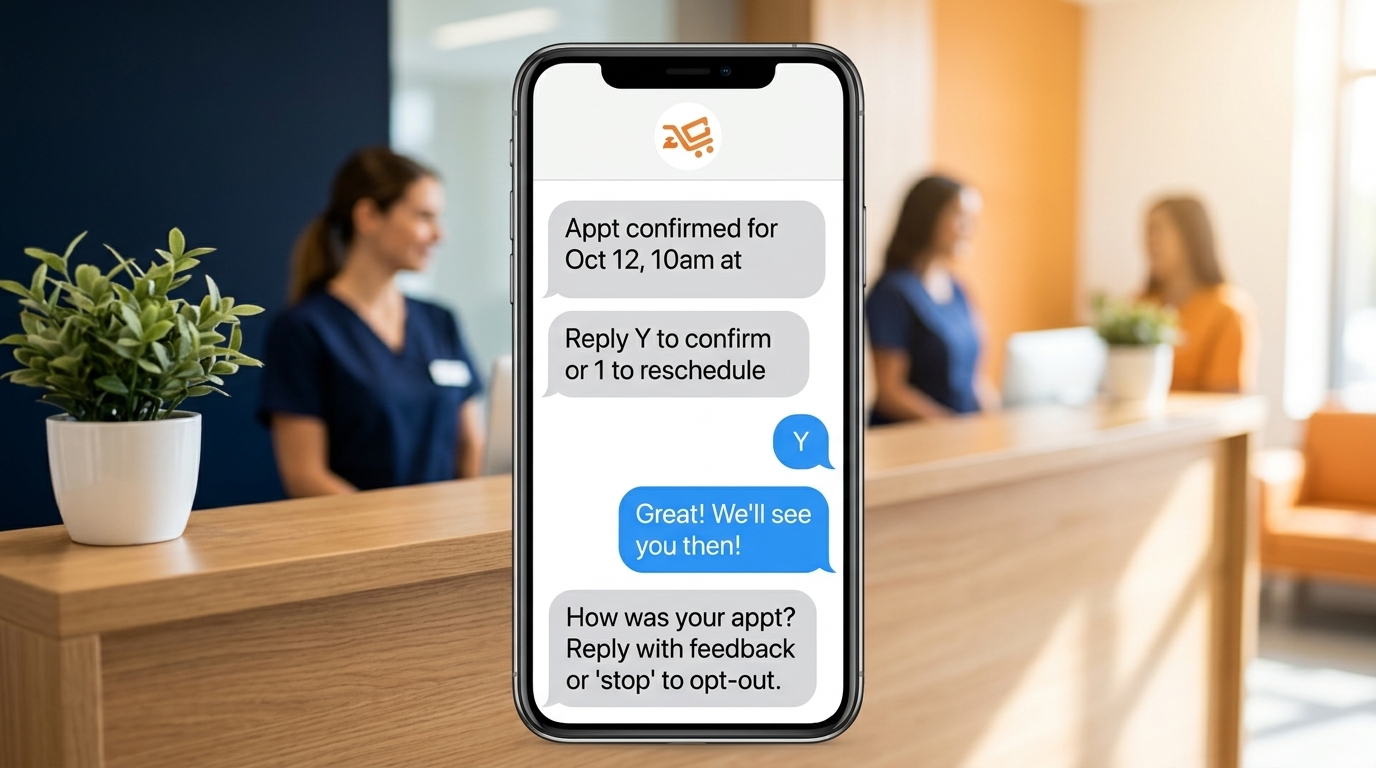
MoFu (Middle of Funnel) is where prospects compare options, read reviews, watch demos, and decide whether you're worth their time.
This is the stage where most businesses lose the lead because nobody answered the phone, follow up was slow, or the prospect simply forgot. The buyer is actively shopping (usually looking at three to five options), and the business that responds first usually wins even when it's not the best choice. Companies that excel at lead nurturing generate fifty percent more sales-ready leads at thirty-three percent lower cost, according to Forrester Research.
Speed wins: The business that responds first usually wins the job, even when it's not the best business in town. That's why automated response is built into the platform instead of treated as an add-on.
Small local service businesses lose more revenue to unanswered phones than to bad marketing. The lead called, nobody picked up, and they called the next name on the list before the voicemail even finished. The Launch AI Workforce provides done-for-you AI employees that manage the Interest stage around the clock so business owners don't have to, handling appointment booking and lead follow up automatically. We install it, train it on your business, and hand you the keys. You don't configure anything.
AI voice agents and AI receptionists catch leads that fall through the cracks after hours, on weekends, and during the lunch rush when the front desk is swamped. The system answers the phone, qualifies the lead, books the appointment, and drops the contact into your pipeline with full conversation history.
AI marketing for ecommerce changes the consideration stage in measurable ways. AI provides instant answers to product questions without waiting for a human, which keeps buyers engaged instead of leaving to find answers elsewhere. Personalized product recommendations based on browsing history move buyers toward a decision faster. Automated cart recovery sequences catch buyers before they leave and bring them back with a reminder or an incentive. The buyer who abandons a cart at eleven at night gets a text at nine the next morning, and that recovery happens whether you're awake or not.
Bottom of Funnel: Conversion and Action
BoFu (Bottom of Funnel) is the purchase stage where the prospect decides to buy, book, or commit.
This stage includes sales calls, checkout pages, proposal signing, and any final step that turns a lead into a customer. Conversion rates at this stage are usually limited by trust (not by the product), which is why testimonials, guarantees, and clear next steps matter more than features. Prospects at the bottom of the funnel have already decided what they need. They're deciding who to buy it from.
Sales funnels and landing pages inside Launch CRM are designed to convert both business-to-business marketing traffic and direct-to-consumer DTC traffic without separate tools. The funnel builder, the checkout, the email follow up, the SMS reminders, and the CRM all live in the same system, so data flows without middleware or Zapier glue.
The difference between a sales funnel and a marketing funnel is mostly semantic in modern use. Marketing funnels focus on the awareness and interest stages while sales funnels focus on conversion, but both describe the same customer journey. The terms split because different teams owned different stages, but the prospect doesn't care about your org chart. They care whether you made it easy to say yes.
| Stage | What the Prospect Does | What the Business Provides | Common Drop Off Point |
|---|---|---|---|
| Awareness | Discovers the problem and the brand | Content, ads, SEO, social | Never hearing about you |
| Interest | Compares options and evaluates fit | Reviews, demos, follow up, phone calls | Slow response or no response |
| Conversion | Decides to buy and completes purchase | Clear offer, easy checkout, proposal | Unclear next step or friction |
| Loyalty | Buys again or upgrades | Automated follow up, excellent service | Being forgotten after the first sale |
| Advocacy | Refers others and leaves reviews | Review requests, referral incentives | Never being asked |
Post Purchase: Loyalty and Advocacy
The funnel doesn't end when the prospect buys.
Profits rise as a customer's relationship with a company lengthens, according to Harvard Business Review. Loyalty is driven by consistent follow up, excellent service, and automated systems that ask for the next purchase before the customer forgets about you. Most businesses treat the one-time buyer as the end of the journey and never contact that person again, leaving the most profitable revenue on the table.
The follow up is the money: Most owners quit after one or two touches. The buyer who says no today is very often a buyer who says yes in ninety days, and almost nobody is still there in ninety days.
SMS marketing and reputation management automate the post-purchase experience, sending review requests at the right moment and re-engagement offers when buying frequency drops. The system sends a review request three days after the job is done, a check-in message at thirty days, and a win-back offer at ninety days if the customer hasn't returned. None of it requires a human to remember or a spreadsheet to track.
Advocacy turns happy customers into referral sources, but almost nobody asks for the review or the referral (which is why automation wins here too). Owners will do excellent work for twenty customers in a row and then wonder why the competitor with worse work has more stars. The review isn't earned by quality. It's earned by asking, consistently, in an automated way, at the right moment after the job.
The single fastest money in most businesses is already in the database. Owners have hundreds or thousands of past customers and old leads sitting in a spreadsheet, a phone, or a dead email tool, and they've never once gone back to them. Reactivating that list costs nothing but the message, and it produces cash before anything else has time to compound.
How Marketing Information Management Tracks Movement Between Stages
Marketing information management is the practice of tracking how prospects move through different stages using data, and it falls apart when your tools don't talk to each other.
We see owners logging into a scheduler, an email tool, a text tool, a funnel builder, a review tool, and a CRM that none of the others talk to, which means funnel data is lost between disconnected platforms. A lead fills out a form on the landing page, the email tool sends a welcome sequence, the phone rings and goes to voicemail, the scheduler shows an open slot but nobody books it, and the owner has no idea where the breakdown happened because every step lives in a separate login.
Launch CRM consolidates ten separate tools into one operating system to ensure contact data, conversation history, and funnel position are always visible in one place. The lead comes in. The system logs the source. The AI voice agent answers the call. The appointment gets booked. The confirmation goes out. The reminder fires. The customer shows up. The invoice gets sent. The review request follows three days later. Every step is tracked, every conversation is recorded, and the entire journey is visible on one contact record.
When ad performance, website visits, email opens, and phone calls all flow into the same system, you can see which campaigns produced real customers instead of just clicks. Most ad platforms show you cost per click and impressions. Launch CRM shows you cost per booked appointment and cost per closed deal, because the ad platform, the funnel, and the pipeline all share the same data.
Sales and marketing alignment becomes possible when both teams are looking at the same pipeline instead of separate spreadsheets. Marketing knows which leads converted and what it cost to get them. Sales knows which campaigns sent qualified buyers instead of tire kickers. Nobody's guessing, and nobody's pointing fingers, because the data tells the story. You can learn more about how sales and marketing alignment eliminates the blame game and turns both teams into one revenue engine.
Marketing information management is the difference between running a business on intuition and running it on facts.
Building Your Funnel Without An Agency
You don't need an agency retainer to launch digital marketing if you have the right platform and the willingness to implement.
Digital marketing packages for small business often bundle awareness, consideration, and conversion tactics into monthly retainers that cost thousands and deliver reporting instead of revenue. Most agency packages focus on traffic and impressions but ignore the interest, conversion, and loyalty stages where the real money sits. A complete funnel package includes ad management, landing pages, automated follow up, appointment booking, review requests, and reactivation campaigns. Very few agencies deliver all of that in one connected system.
The fastest way to create a marketing funnel is to start with the database you already have, send a reactivation offer, and build automated follow up for new leads while that runs. Turn on missed call text back and automated response first because they catch revenue you're already paying for, then layer in ads and content once the leaks are plugged. Testing a small budget on a simple funnel beats launching a complex campaign with a big spend, because you learn what the market wants before you invest real money.
Launch AI Academy provides full training on building funnels, running ads, and implementing automation so business owners can do it themselves instead of outsourcing strategy to someone who doesn't know their customers. The training covers every stage of the funnel (from cold traffic to repeat buyers), and it's built for owners who want to implement rather than delegate. You can see transparent pricing for the AI tools and training that cover the entire funnel without stacking subscriptions.
The businesses that grow fastest aren't the ones with the best product. They're the ones who actually turn things on and let the systems run. We've watched two businesses get the identical plan and identical tools, and the difference in results twelve months later comes down entirely to who actually implemented. Launch things. Test before you invest. Fix the leaks before you buy more traffic. The funnel isn't a strategy. It's a machine, and machines only work when you start them.
If you're ready to replace ten separate tools and finally see your entire funnel in one place, Launchcrm today.
Frequently asked questions
What are the stages of a marketing funnel?
The traditional stages are Awareness, Interest, Desire, and Action (known as the AIDA model). Modern funnels add Loyalty and Advocacy to capture repeat purchases and referrals. Each stage represents a business system that either runs automatically or leaks revenue when ignored, and understanding them helps you diagnose where prospects drop off instead of guessing.
How do marketing funnel stages work?
Prospects enter at the top when they first learn about your business, move through consideration as they compare options, and convert at the bottom when they decide to buy. After the purchase, automated systems drive loyalty and turn customers into advocates who refer others. The funnel works best when each stage has a clear action that moves the prospect to the next step without manual effort.
What happens at each stage of the marketing funnel?
Awareness is where prospects discover you exist and learn they have a problem you can solve. Interest and Consideration is where prospects compare options, read reviews, and decide whether you're worth their time. Conversion is where the prospect commits by buying, booking, or signing. Loyalty and Advocacy is where customers buy again and refer others when automated follow up keeps you top of mind.
How does marketing information management help a small business track funnel stages?
Marketing information management tracks how prospects move through different stages using data from ads, website visits, emails, and phone calls. It only works when all your tools talk to each other; disconnected platforms lose funnel data and make it impossible to see which campaigns produced real customers. A unified CRM like Launch CRM keeps contact data, conversation history, and funnel position visible in one place so you know exactly where each lead stands.
What are some real world target market examples for a local service business?
HVAC companies target homeowners searching for air conditioner repair or furnace replacement in their service area. Medical practices target patients searching for specific symptoms, treatments, or insurance accepted. Legal firms target individuals searching for divorce attorney, personal injury lawyer, or estate planning help. Contractors target property managers and homeowners searching for kitchen remodel, bathroom renovation, or home addition.
How does AI marketing for ecommerce change the consideration stage?
AI provides instant answers to product questions without waiting for a human, which keeps buyers engaged instead of leaving to find answers elsewhere. Personalized product recommendations based on browsing history move buyers toward a decision faster. Automated cart recovery sequences catch buyers before they leave and bring them back with a reminder or an incentive. AI voice agents and chatbots handle after-hours inquiries so no lead is lost to a competitor who answered first.
What digital marketing packages for small business actually cover every funnel stage?
Most agency packages focus on awareness and traffic but ignore the interest, conversion, and loyalty stages where the real revenue sits. A complete funnel package includes ad management, landing pages, automated follow up, appointment booking, review requests, and reactivation campaigns. Launch CRM provides all of those capabilities in one platform instead of ten separate tools, so every stage is covered without switching logins or losing data between systems.
How do I launch digital marketing for a new business without an agency?
Start with the fastest revenue: reactivate your database with an offer, even if the list is small. Turn on missed call text back and automated response so you catch leads you're already paying for. Build one simple funnel with a landing page, a follow up sequence, and a clear offer, then send traffic to it with a small ad budget. Test before you invest; put a small amount behind the funnel, find out if the market wants it, and only then open the spend. Launch AI Academy provides full training on building funnels and running ads so you can implement it yourself instead of outsourcing to someone who doesn't know your customers.