
14 Types of E-commerce Models for Your Business
Last updated September 16, 2026
Choosing the right digital structure is the difference between a scalable engine and a leaky bucket. This list breaks down the primary e-commerce directions and fulfillment models. You'll learn how to align these models with your revenue goals while owning your data.
Table of contents
- 1. Business to Consumer (B2C) remains the most common retail model for online stores.
- 2. Business to Business (B2B) handles high-volume transactions between producers and wholesalers.
- 3. Direct to Consumer (D2C) removes the middleman to protect your brand margins.
- 4. Consumer to Business (C2B) flips the traditional model by letting individuals sell to companies.
- 5. Mobile commerce (Mcommerce) captures the growing audience of smartphone shoppers.
- 6. Consumer to Consumer (C2C) relies on third-party platforms to facilitate peer-to-peer sales.
- 7. Business to Administration (B2A) covers the essential services provided to government bodies.
- 8. Subscription-based commerce generates recurring revenue by automating customer refills.
- 9. Business to Business to Consumer (B2B2C) creates a seamless link from factory to front door.
- 10. Dropshipping allows you to sell products without holding physical inventory.
- 11. Wholesaling requires a robust digital portal to handle bulk order processing.
- 12. White Labeling lets you sell proven products under your own American brand.
- 13. Private Labeling offers a middle ground between manufacturing and white labeling.
- 14. Consumer to Administration (C2A) helps citizens manage their public obligations online.
- How to Determine Which Model Fits Your Business
- Integrating AI into Your E-commerce Structure
- Frequently asked questions
1. Business to Consumer (B2C) remains the most common retail model for online stores.
The B2C model is the standard retail framework where a business sells directly to an individual end user. In this structure, the electronic relationship is built on a direct transaction intended for personal use rather than resale. Most discussions about e-commerce types start here because it covers everything from buying a pair of shoes to ordering a digital course. B2C is typically characterized by shorter sales cycles and emotional buying triggers.
Because B2C transactions are often sporadic or one-off compared to the recurring nature of wholesale, your storefront must be highly informative and easy to navigate. Consumers today expect lower prices and higher convenience than they find in physical retail. To succeed, you need to plug the holes in your funnel by ensuring every visitor is captured. Owners can spend significant money on ads only to lose the sale because they lack automated follow-up. If you're running a B2C shop, your priority should be increasing purchase frequency through automated sequences that invite buyers back without you lifting a finger.
Source: Bloomidea
2. Business to Business (B2B) handles high-volume transactions between producers and wholesalers.
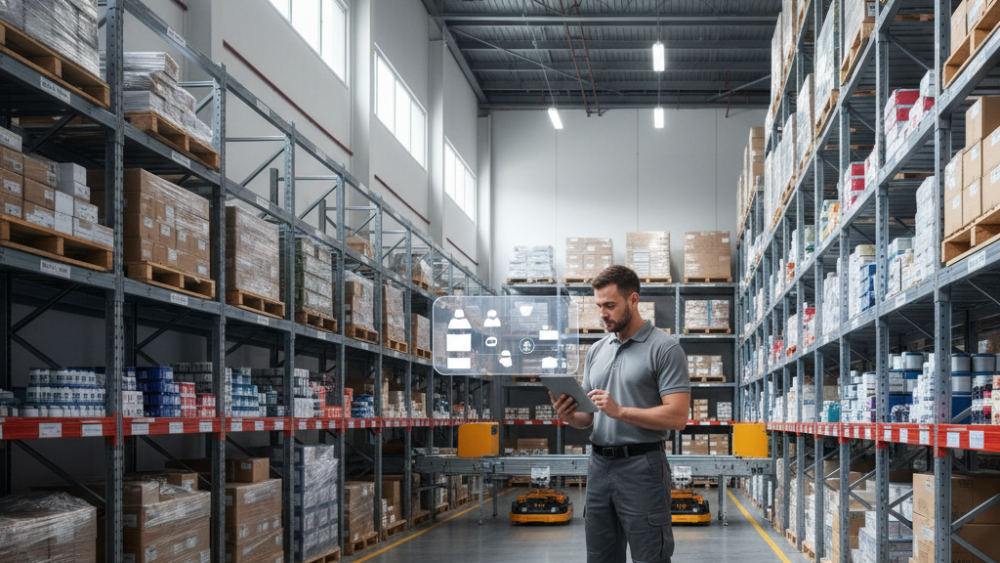
B2B e-commerce involves electronic transactions conducted specifically between two companies. The buyer is rarely the end user. Instead, they're often a reseller, a manufacturer buying raw materials, or a wholesaler who will eventually distribute the goods to the public. The sales process is more logic-driven and involves longer cycles, bulk pricing, and recurring procurement needs.
A major challenge for B2B owners is managing complex data without getting buried in manual paperwork. Many businesses struggle because they use one system for their retail side and a completely different one for wholesale partners. Launch CRM can handle both B2C and B2B pipelines in one ecosystem, preventing the problem of multiple separate logins that slows down growth. By consolidating your contacts and deals into one place, you can track high-value bulk orders alongside smaller retail sales. This unified approach ensures that no wholesale lead falls through the cracks, allowing your team to focus on building relationships rather than managing spreadsheets.
Source: Wikipedia
3. Direct to Consumer (D2C) removes the middleman to protect your brand margins.
The D2C model is a specific subset of B2C where a brand manufactures its own products and sells them directly to the end user, bypassing third-party retailers or marketplaces. By cutting out the middleman, you retain full control over your brand storytelling and, most importantly, your margins. This model has exploded as brands seek to own the entire customer experience from the first ad click to the final delivery.
One of the biggest risks of D2C is relying on "rented land" like social media platforms or large marketplaces that can change their algorithms overnight. To protect your independence, you must own your list and your data. Using Launch Data helps e-commerce owners own their first-party pixel data, which is critical for protecting B2C margins as ad costs rise. By identifying anonymous visitors and turning them into contactable leads, you can retarget potential buyers directly rather than paying a premium to a third-party platform to reach your own audience again. This shift from renting an audience to owning one is the key to long-term stability.
Source: BigCommerce
4. Consumer to Business (C2B) flips the traditional model by letting individuals sell to companies.
In a C2B model, the individual provides value, products, or services that a business consumes. This is a complete reversal of the traditional retail flow. You see this most often in crowdsourcing projects where a company asks for contributions from the public. Common examples include freelance marketplaces, stock photography sites where individuals upload photos for corporate use, or influencers who sell their audience reach to brands for marketing campaigns.
In this model, the consumer often sets the terms or the price for their contribution. For the business, C2B offers a way to access diverse talent or assets without the overhead of full-time staff. If you're operating a business that relies on C2B inputs, your CRM needs to be robust enough to handle outbound payments and contributor management just as efficiently as it handles sales. Success here depends on building a reliable network of providers who feel valued. Just like a retail sale, the follow-up matters. Automating the onboarding of these individual contributors ensures your business stays fed with the content or services it needs to function.
Source: Bloomidea
5. Mobile commerce (Mcommerce) captures the growing audience of smartphone shoppers.
Mcommerce isn't just a responsive website; it's the specific handling of transactions through mobile devices, dedicated apps, or social commerce feeds. As more consumers ditch their desktops for smartphones, your ability to ring the cash register depends on a mobile-first design. This includes everything from one-tap payments to SMS-based marketing that reaches customers exactly where they're looking.
Failure to optimize for mobile results in a significant leak in your conversion bucket. If a checkout takes too long or a form is hard to fill out on a small screen, the buyer will bounce. Many businesses lose revenue simply because they don't have a missed call text-back feature or mobile-optimized landing pages. Integrate your mobile strategy with a unified inbox, and you can respond to inquiries via text immediately. Speed decides the sale. Being able to close a deal through a mobile chat or a text-to-pay link gives you a massive advantage over competitors who require a phone call during business hours.
Source: Salesforce
6. Consumer to Consumer (C2C) relies on third-party platforms to facilitate peer-to-peer sales.
The C2C model encompasses all electronic transactions conducted between individuals, such as online auctions, classified ads, or peer-to-peer marketplaces. While the transaction is between two consumers, a third party is required to provide the digital platform and often handles the payment processing and dispute resolution. This model thrives on community trust and the ease of listing items for sale.
If you're building a platform to facilitate C2C sales, your focus must be on safety and transaction speed. The platform owner makes money through listing fees or a percentage of the sale, meaning your growth is tied to the volume of successful peer interactions. The most common mistake in this model is failing to automate the reputation management side. Buyers and sellers need to be prompted to leave reviews to build the trust that fuels the ecosystem. By automating these requests, you ensure the platform stays healthy and active without needing a massive team to manually moderate every interaction.
Source: Bloomidea
7. Business to Administration (B2A) covers the essential services provided to government bodies.
B2A (also called Business to Government, or B2G) involves transactions between private companies and public administration agencies. This sector is vast, covering everything from social security systems and legal document management to fiscal measures and infrastructure projects. Government entities have increasingly moved their procurement and service needs online to improve efficiency and transparency.
Navigating B2A requires a high level of compliance and professional tracking. These aren't emotional purchases. They're contract-driven and often involve strict deadlines. If your business serves government bodies, you can't afford to let details slip through the cracks. Using a dedicated system for deal tracking and document signing is mandatory. The B2A sector has expanded due to e-government investments, but the barrier to entry can be high. Success requires an infrastructure that government clients can trust. Managing these complex sales pipelines within a unified system allows you to track every document and approval stage, ensuring you stay in compliance and get paid on time.
Source: Bloomidea
8. Subscription-based commerce generates recurring revenue by automating customer refills.
Subscription commerce focuses on delivering products or services on a recurring schedule in exchange for a set fee. This model is a favorite because it builds long-term loyalty and creates predictable cash flow. It works for digital goods like software as a service, as well as physical consumables like coffee, vitamins, or grooming products. Instead of paying to acquire a customer once, you create a system where they buy from you for years.
The industry often says to focus only on getting new subscribers, but the real profit is in reducing churn. A subscription model fails if the "leaky bucket" of cancellations is bigger than the new signups. You need to use automated win-back sequences and refill reminders to keep the purchase frequency high. Managing these recurring payments also requires a redundant payment setup so that a single processor error doesn't wipe out your entire subscriber base overnight. Automate the billing and follow-up, and you turn a one-time buyer into a durable asset for your business.
Source: Salesforce
9. Business to Business to Consumer (B2B2C) creates a seamless link from factory to front door.
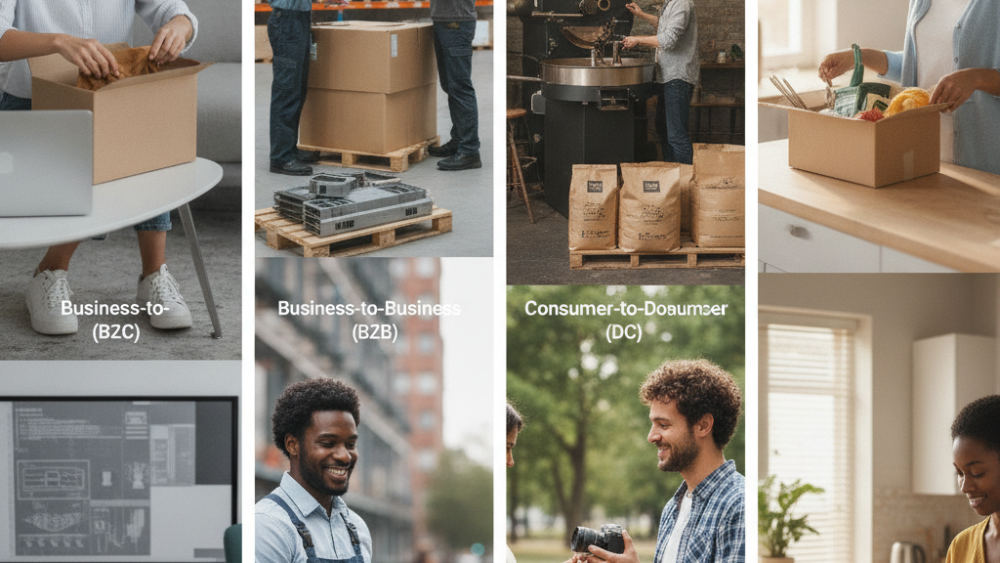
B2B2C is a sophisticated hybrid where a business sells its products through another business to reach the final end consumer. Unlike traditional wholesaling where the manufacturer loses touch with the user, the original business often maintains some interaction or brand presence during the final sale. This model is gaining traction in white-label partnerships and affiliate networks where the primary producer wants to tap into the established audience of a partner.
This structure allows manufacturers to leverage the trust and traffic of a middleman while still gathering data on the end user. It requires tight technical integration to ensure that order data flows correctly between all three parties. Brands utilizing this model often find that they can scale much faster than going it alone, provided they have the infrastructure to manage these multi-party relationships. It's an excellent way to enter new markets without the massive overhead of building a standalone retail presence from scratch.
Source: BigCommerce
10. Dropshipping allows you to sell products without holding physical inventory.
Dropshipping remains a popular entry point for digital entrepreneurs because the merchant never takes physical possession of the goods. Instead, the retailer transfers customer orders and shipment details to a manufacturer or wholesaler, who then ships the product directly to the buyer. This creates a low-capital way to test new markets or niche products without the risk of unsold stock sitting in a warehouse.
However, lower entry barriers often mean thinner margins and less control over the shipping experience. To maintain profitability, businesses must be hyper-efficient with their customer interactions. Our AI Workforce can manage the after-hours customer service for dropshipping models to handle high volume without adding staff, ensuring that late-night inquiries are answered immediately. Because you don't control the fulfillment speed, providing world-class communication is the only way to protect your brand reputation and keep customers coming back for more.
Source: BigCommerce
11. Wholesaling requires a robust digital portal to handle bulk order processing.
Wholesaling involves selling products in large quantities at a lower price per unit specifically to other businesses. This model is the backbone of many supply chains, requiring B2B-specific features such as tiered pricing, credit terms, and bulk discount triggers. The complexity of these transactions means that a simple retail checkout is rarely enough. You need a system that can handle purchase orders and custom quotes.
Successful wholesalers often partner with a 3PL fulfillment organization to manage heavy logistics and freight shipping. By outsourcing the physical storage and moving of bulk pallets, the business can focus on sales and relationship management. Because wholesale orders are high-value, the cost of losing a single lead is significant. Managing these professional relationships requires a clear view of the entire pipeline, ensuring that every bulk inquiry is followed up on within minutes rather than days.
Source: Jay Group
12. White Labeling lets you sell proven products under your own American brand.
White labeling allows you to take a generic product manufactured by a third party and apply your own name and logo. This is a very common strategy in the supplements, skincare, and apparel industries where the formulation or design is already proven. It offers a significantly faster time to market because you skip the lengthy and expensive product research and development phase.
The challenge with white labeling is differentiation. Since other companies might be selling the exact same base product, your success depends entirely on your branding, marketing, and the quality of your customer journey. You must own your audience data to ensure you aren't just a temporary middleman for the manufacturer. By building a unique brand identity around these generic goods, you can command higher prices and build a loyal following that ignores the cheaper, unbranded alternatives.
Source: BigCommerce
13. Private Labeling offers a middle ground between manufacturing and white labeling.
Private labeling takes the concept of white labeling a step further by hiring a manufacturer to create a unique product exclusively for your company. This offers a higher barrier to entry for competitors because they can't simply buy the same product from the same factory and slap their own label on it. You have more control over the ingredients, materials, and specific features of the item.
While this model provides more brand protection, it requires a more significant investment in product specifications and quality control. You're responsible for ensuring the product meets your standards before it hits the market. This model is ideal for brands that have identified a gap in existing white-label products and want to offer something truly proprietary. It balances the scalability of third-party manufacturing with the unique value proposition of a custom product.
Source: BigCommerce
14. Consumer to Administration (C2A) helps citizens manage their public obligations online.
Consumer to Administration (C2A) encompasses all electronic transactions between individual citizens and public administration bodies. This model focuses on increasing the efficiency and transparency of government interactions. Common examples include filing tax returns online, paying for health services, or settling university tuition fees through a government portal.
C2A models are designed to reduce the friction of bureaucratic processes, making it easier for individuals to fulfill their legal and social obligations. By moving these services online, governments can reduce administrative costs and improve the speed of service delivery. For the consumer, it provides a more convenient way to interact with the state without needing to visit physical offices. This sector continues to expand as more public services adopt digital-first strategies to serve their populations better.
Source: Wikipedia
How to Determine Which Model Fits Your Business
Selecting the right direction for your business requires a realistic assessment of your current team size and revenue goals. If you're a solo entrepreneur starting with limited capital, the D2C or dropshipping models might be the fastest way to launch. These allow you to focus on marketing and sales without getting bogged down in manufacturing or heavy logistics. Conversely, if you have access to large quantities of inventory, wholesaling provides a path to high-volume revenue through B2B channels.
Your fulfillment strategy should also dictate your choice. B2B and B2A models require robust freight and bulk shipping capabilities, while B2C and D2C models focus heavily on individual parcel logistics and rapid returns. Service-based businesses, such as HVAC companies or medical practices, often find success by mixing B2C retail sales with online appointment booking. This complexity requires a unified CRM rather than fragmented tools to ensure a smooth customer experience. We provide the training through Launch AI Academy to implement these models effectively and choose the right tech stack for their specific goals.
Integrating AI into Your E-commerce Structure
To remain competitive, you must integrate automation into your chosen model. High-volume B2C and D2C brands can use AI workforce agents to handle the massive load of customer service inquiries. These agents cover the hours when your human team isn't working, catching leads and resolving issues that would otherwise lead to abandoned carts. This ensures that your business never truly closes, maximizing every dollar spent on advertising.
Data ownership is the other critical pillar of modern commerce. You must stop building your business on rented land. By using Launch Data to own your first-party pixel data, you ensure that sudden policy changes on social platforms or third-party marketplaces don't end your business overnight. Consolidating your B2B and B2C information into a single ecosystem (such as our full-stack CRM) provides a single source of truth for all customer relationships. Finally, you can work to improve metrics across the board—including leads, conversion rates, and purchase frequency—by using automated follow-up sequences, ensuring no opportunity is ever wasted.
Frequently asked questions
What are the main types of e-commerce business models?
The primary models include B2C (Business to Consumer), B2B (Business to Business), C2C (Consumer to Consumer), and C2B (Consumer to Business). Newer variations like D2C (Direct to Consumer) and B2A (Business to Administration) have grown significantly as digital infrastructure improves.
Can one brand operate in more than one e-commerce type at the same time?
Yes. Many brands operate a B2C store for end users while maintaining a B2B portal for wholesale partners. Managing these through an integrated AI-powered commerce platform prevents data silos and duplicate manual work.
Which e-commerce model is the easiest for an American small business to start today?
D2C is often the most straightforward for brands with unique products, while dropshipping offers the lowest entry barrier for those without inventory budget. We provide the training through Launch AI Academy specifically for American entrepreneurs to implement these models effectively.
How do returns and reverse logistics differ between B2B and B2C models?
B2C returns are high-volume and often automated to maintain customer satisfaction and repeat purchase rates. B2B logistics involve larger freight shipments and often require manual inspection or specific contract terms for damaged bulk inventory.
If you're ready to automate your sales follow-up and scale your operations without adding more staff, you should book your discovery call today to see how our AI Workforce can transform your business results.