
Marketing Conversion Rate Optimization for Business Growth
Last updated November 12, 2026
Marketing conversion rate optimization (CRO) is the data-driven practice of increasing the percentage of website visitors who complete a desired action, such as making a purchase or booking an appointment. CRO matters because more visitors don't automatically create more buyers; the experience you provide determines whether attention turns into actual business. For American small businesses, effective CRO means more revenue from the same traffic, making every ad dollar work harder without increasing spend.
Table of contents
- Key takeaways
- What Marketing Conversion Rate Optimization Really Means
- Why CRO Matters More Than Traffic for American Businesses
- The Four Phase CRO Methodology That Actually Works
- Behavioral Psychology Principles That Drive Conversion
- CRO Strategies for E-Commerce Stores and Local Service Businesses
- How AI and Unified Platforms Simplify CRO for Small Teams
- Practical CRO Tactics You Can Implement This Week
- When CRO Is the Wrong Move and What to Do Instead
- Implement CRO the Right Way With the Right Tools
- Frequently Asked Questions
Key takeaways
- CRO increases the percentage of visitors who convert into customers, boosting revenue without increasing ad spend.
- Small businesses can implement CRO effectively by focusing on first-party data, unified platforms, and AI-powered automation.
- Behavioral principles like scarcity, social proof, and loss aversion drive conversion when applied ethically.
- Service-based businesses benefit from CRO through automated response systems, missed call recovery, and 24/7 availability.
- A proper CRO methodology includes research, hypothesis, testing, and measurement of commercial results, not vanity metrics.
What Marketing Conversion Rate Optimization Really Means
Conversion Rate Optimization Glossary - CDP.com, whether that means making a purchase, booking an appointment, or signing up for your list. The work happens at the intersection of customer behavior and business systems: you find where friction exists, remove it, and watch more people complete the action that creates revenue.
More traffic doesn't automatically create more buyers. What Is Conversion Rate Optimization: A Practical - Quikly. A flood of visitors to a poorly designed funnel just means more people saw something that didn't work. CRO asks a different question: how many of the people already here actually take the next step?
Conversion Rate Optimization Glossary - CDP.com because it makes every dollar you spend on ads, content, and outreach work harder. Understanding how customers interact across touchpoints lets you optimize the entire journey, not just the landing page. When you know where people drop off, you can fix that exact point instead of guessing.
At Launch Commerce, we approach CRO as plugging leaks in the bucket, not pouring more water in the top. Most businesses spend enormous money filling the funnel while leads drain out at four points: the leads themselves are never captured, the ones you do capture convert poorly, buyers purchase once and disappear, and past customers never come back. Fix the leaks before you add more traffic.
Local service companies in places like Escondido lose revenue to unanswered calls and slow follow up just as often as e-commerce stores lose revenue to abandoned carts. A plumber who spends three thousand dollars on ads but misses half the calls after five PM has a conversion problem, not a traffic problem. CRO applies to every business model.
Why CRO Matters More Than Traffic for American Businesses
Businesses routinely spend thousands on ads to generate leads they never answer or follow up with properly. The ad works. The click happens. The form gets submitted. Then the lead sits in an inbox for two days while the owner finishes jobs. By the time someone calls back, that lead has already hired the competitor who answered in ten minutes.
Most owners think they have a traffic problem when they actually have a leak problem. They're pouring more money in the top of a bucket that has four holes in the bottom: leads, conversion, purchase frequency, and repeat buyers. Adding traffic to a leaking bucket just makes the leak more expensive. You pay more to learn the same lesson faster.
The four leak points show up everywhere. First, leads aren't captured because the form is too long, the phone goes to voicemail, or the live chat is only staffed nine to five. Second, captured leads convert poorly because follow up is slow, inconsistent, or nonexistent. Third, customers buy once and never again because nobody asks them to come back. Fourth, past buyers are lost entirely because they sit in a dead spreadsheet and the business never contacts them again.
Conversion Rate Optimization Glossary - CDP.com, allowing teams to optimize for those most likely to convert. When every interaction across email, SMS, website, ads, and calls flows into one place, you see the whole journey instead of disconnected fragments. Launch CRM consolidates contacts, pipelines, email, SMS, appointment booking, workflow automation, and reputation management so every touchpoint is visible and every leak can be measured.
The fastest money is already in the database. Reactivating past customers and old leads costs nothing but the message. Owners have hundreds or thousands of names sitting in a phone, a spreadsheet, or a dead email tool, and they've never once gone back to them. A promotion sent to that list can produce revenue inside days, not quarters, because these people already know you and already said yes once.
The Four Phase CRO Methodology That Actually Works
What Is Conversion Rate Optimization: A Practical - Quikly. The sequence matters because skipping research turns testing into guesswork, and measuring vanity metrics instead of revenue turns wins into losses you celebrate by accident.
The research phase identifies where visitors drop off, what questions go unanswered, and where friction exists in the journey. Watch session recordings, read support tickets, ask customers directly, and look at funnel reports to see the exact step where people leave. If half your traffic lands on the pricing page and vanishes, that page has a problem worth naming. If calls come in but appointments aren't booked, the gap between interest and commitment is your target.
Hypothesis creation makes the idea testable by turning a vague hunch into a specific, falsifiable prediction. "The checkout page is confusing" isn't a hypothesis. "Removing the coupon code field will increase completed purchases by at least 8 percent because visitors who don't have a code feel like they're overpaying" is a hypothesis. You named the change, the expected result, the size of the result, and the reason you think it will happen.
A/B testing (also called split testing) is the method used to compare two versions of a webpage or app to see which performs better. Half your traffic sees version A, half sees version B, and you measure which group converts at a higher rate. The test runs until you have enough conversions to know the difference is real, not random. Testing tiny changes like button color wastes time unless you have enormous traffic. Test bigger ideas: different offers, rewritten headlines, restructured funnels.
Measuring commercial results means tracking revenue, profit, customer lifetime value, and return on ad spend. Not clicks, page views, or time on site. A test that lifts email open rates but tanks sales is a loss, not a win. A test that cuts conversion rate but doubles average order value is a win, not a loss. Non-significant results mean the test didn't run long enough or the difference between the two versions was too small to detect. Accept it and move to the next hypothesis instead of declaring a winner when the data says there isn't one.
Behavioral Psychology Principles That Drive Conversion
What Is Conversion Rate Optimization: A Practical - Quikly when you apply them ethically and honestly. These aren't tricks to manipulate people into buying things they don't want. They're frameworks that reduce the mental effort required to make a decision, and they work because they match how people actually think.
Scarcity bias means limited availability drives urgency and action. When something is scarce, people value it more and act faster to get it. The principle works when the scarcity is real: only three appointment slots left this week, only twelve units in stock, enrollment closes Friday. Fake scarcity destroys trust and brands you as dishonest. If you're going to reopen the offer next month, don't say this is the last chance.
Loss aversion is the principle that people prefer avoiding losses over acquiring equivalent gains. Losing twenty dollars hurts more than finding twenty dollars feels good. Frame your offer around what the customer stands to lose by waiting, not just what they gain by acting. "Prevent expensive emergency repairs" outperforms "save money on maintenance" because the brain weighs the avoided loss more heavily than the potential gain.
Social proof leverages the influence of others' actions or endorsements to drive conversion. Customer reviews, testimonials, case studies, and user counts all signal that other people made this decision and it worked out. A service business with 127 five-star reviews converts better than one with identical pricing and no reviews, because the prospect sees proof that real people had a good experience. Learn how we apply social proof through reputation management that automates review collection and turns satisfied customers into visible credibility.
Commitment and consistency means that once someone takes a small action, they're more likely to complete the larger action that follows. Downloading a guide, starting a quiz, or watching a video creates a micro-commitment. The brain wants to stay consistent with past behavior, so the person who clicked "yes, send me the checklist" is more likely to book the appointment when you follow up than the person who saw the offer and kept scrolling.
Temporal discounting is the principle that immediate rewards are valued more than future ones. People will choose a smaller benefit today over a larger benefit six months from now, even when the math says to wait. Front-load the benefits in your messaging: emphasize what happens this week, not what compounds over the next year. "Start seeing results by Friday" beats "build long-term success" because the brain discounts the future automatically.
CRO Strategies for E-Commerce Stores and Local Service Businesses
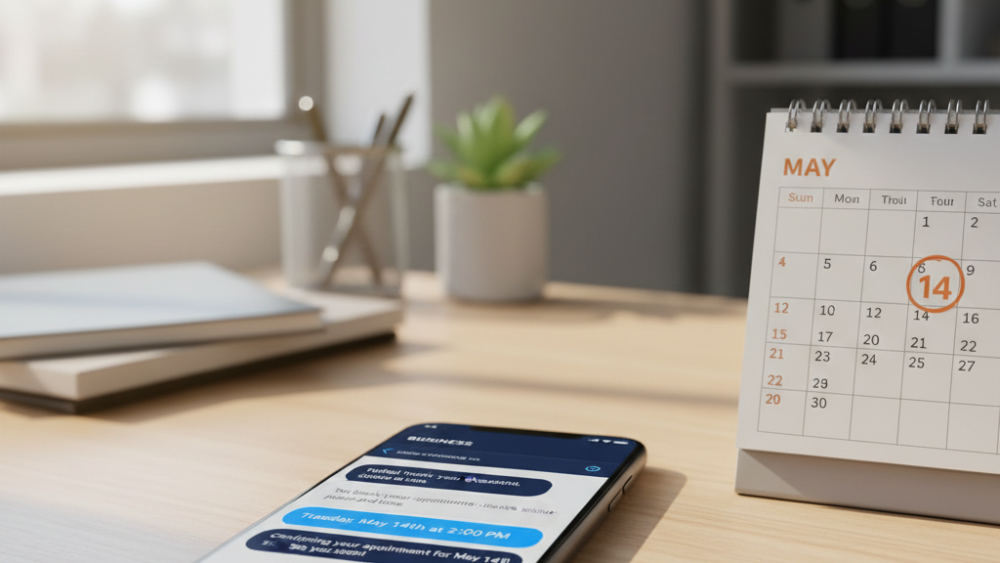
E-commerce stores and service businesses face different conversion challenges and need different CRO strategies. An online store optimizes product pages, cart abandonment, and checkout friction. A local HVAC company optimizes phone answer rates, automated response, and appointment booking. The methodology is the same, but the tactics change with the business model.
E-commerce needs product page optimization: clear images, specific descriptions, visible pricing, and obvious calls to action. Cart abandonment recovery catches buyers who added items but didn't check out, usually through an automated email or SMS sequence offering help or a small incentive. Checkout friction reduction removes unnecessary form fields, offers guest checkout, and displays trust signals like secure payment badges and return policies.
Service businesses need automated response so no inquiry sits unanswered, especially after hours. Missed call text back sends an SMS to anyone who called and didn't reach a human, keeping the conversation alive until someone can follow up. Appointment booking integrates directly with the calendar so prospects can schedule without playing phone tag. After-hours coverage means leads that arrive at nine PM get an immediate reply instead of waiting until tomorrow when they've already called someone else.
Launch AI Workforce improves conversion for service-based businesses by installing AI voice agents that answer the phone, book appointments, and follow up on leads 24 hours a day, seven days a week. You don't configure anything. We install it, train it on your business, and hand you the keys. HVAC companies, medical practices, legal firms, and contractors lose revenue every time a call goes unanswered. An AI receptionist catches what would have leaked out. The lead who called at nine PM and got an immediate automated response books before calling the competitor whose phone went to voicemail.
Launch DATA turns anonymous website visitors into identifiable leads by capturing first-party pixel data and enriching visitor profiles with contact information. Most businesses have no idea who visited the site unless that person fills out a form. Launch DATA identifies visitors, feeds the enriched profiles straight into Launch CRM for targeted follow-up, and sends the audience into Launch Ads for retargeting. You convert more traffic because you can actually reach the people who didn't buy the first time.
AI e-commerce optimization for local stores means using AI agents to deliver product recommendations, personalized messaging, and dynamic offers based on visitor behavior. AI agents are replacing static product grids with live, conversational recommendations that adapt to what the customer is looking for right now. A visitor browsing winter coats gets a different experience than one searching for running shoes, and the AI adjusts in real time without a human writing fifty variations.
| Business Type | Primary CRO Focus | Key Tactic | Conversion Metric |
|---|---|---|---|
| E-commerce | Product pages, cart abandonment, checkout | Automated email recovery, guest checkout | Orders per visitor |
| Service (HVAC, legal, medical) | Phone answer rate, lead response time | AI voice agents, missed call text back | Booked appointments per inquiry |
| Professional services (consulting, coaching) | Appointment booking, follow-up sequence | Calendar integration, automated nurture | Calls booked per lead |
| Local retail with online store | Foot traffic conversion, local pickup | AI product recommendations, in-store pickup | Orders and pickups per session |
How AI and Unified Platforms Simplify CRO for Small Teams
Most small businesses run six disconnected tools (a scheduler, email platform, text messaging service, funnel builder, review tool, and a CRM that barely talks to any of them) and wonder why conversions leak out at every step. Launch CRM consolidates e-commerce, CRM, workflow automation, email and SMS marketing, appointment booking, and reputation management into a single platform, so all customer data flows into one place without manual export and import. When every interaction lands in the same system, you can track the entire customer journey from first click to final purchase and optimize each step based on what actually happens, not what you think happens.
Launch Ads optimizes advertising campaigns for better conversion rates across 11 platforms from one dashboard, eliminating the need for an agency to babysit your Google, Facebook, Instagram, YouTube, TikTok, LinkedIn, and other accounts. The system builds, launches, monitors, and adjusts campaigns based on real-time conversion data pulled straight from your CRM, so the ad spend flows to the audiences and channels that actually produce customers. You see which ads book appointments, which generate calls, and which burn budget without return, all in one view.
AI marketing for e-commerce assists in optimizing conversion rates by analyzing patterns, suggesting tests, and automating follow-up sequences that would otherwise require a full-time employee to manage. The AI watches what converts, what bounces, and what sits in the cart abandoned, then triggers the right message at the right time. A customer who viewed a product three times but never added to cart gets a different sequence than one who added but abandoned at checkout, and the AI handles the segmentation without you building fifty workflows by hand.
Is there a platform that generates product visuals optimized specifically for conversion rates? While AI can't create product photography, AI agents assist in product recommendations and personalized visual merchandising by curating what each visitor sees based on their behavior and preferences. The platform shows the visitor the product images and descriptions most likely to convert them, rather than a static grid that treats every visitor the same. You upload the visuals once, and the AI decides which combination of images, copy, and offers to present to each segment.
Marketing information management brings unified data across channels into a single view, giving you a holistic understanding of customer behavior that makes CRO decisions faster and more accurate. When email, SMS, website behavior, ad clicks, purchase history, and support tickets all live in one customer profile, you spot the friction points immediately. Unified marketing information management eliminates the guesswork and lets you optimize based on complete data, not a fragment from one channel.
Practical CRO Tactics You Can Implement This Week
Speed to lead wins the job more often than price or quality. The business that responds first usually gets the customer even when competitors offer better service. Missed call text back sends an automated SMS the moment someone calls and you don't pick up, turning a missed opportunity into a conversation that keeps the lead warm until you can call back. The tactic costs nothing, takes ten minutes to set up, and converts a percentage of callers who would have moved on to the next business.
| Tactic | Speed to Implement | Conversion Impact | Time to Revenue |
|---|---|---|---|
| Missed call text back | Quick (hours) | High for service businesses | Immediate |
| Database reactivation | Quick (days) | High for existing customer base | 1 to 2 weeks |
| Automated review requests | Medium (1 week) | Medium, compounds over time | 2 to 4 weeks |
| Repeat purchase sequences | Long (2 to 3 weeks) | Medium to high for e-commerce | 4 to 8 weeks |
Database reactivation produces the fastest revenue because a promotion can be built and sent in days, and past customers already trust you. Most businesses sit on a list of old leads, past buyers, and quote requests who never converted, then spend thousands chasing new traffic. Segment your list by behavior (past buyers get a loyalty offer, quote requests get a deadline discount, abandoned carts get free shipping) and send tailored messages to each group, not one generic blast. A simple email to 500 past customers offering 20 percent off this month can generate more cash than a month of new ads.
Automated review requests ask consistently at the right moment after the job, catching customers when they're happiest and most willing to leave feedback. Most business owners do excellent work and never ask for the review, so the best companies end up with fewer reviews than mediocre competitors who automate the ask. Set the automation to trigger three days after service completion for local businesses, or seven days after delivery for e-commerce, and let the system handle the follow-up without you remembering each time.
Target market examples show how segmentation drives conversion: an HVAC company sends furnace maintenance offers to customers who bought furnaces two years ago, not to everyone on the list. A fitness equipment store sends weightlifting product recommendations to buyers who purchased barbells, and yoga offers to those who bought mats. DTC digital marketing and launch digital marketing build CRO into campaigns from day one by having the landing page, follow-up sequence, and conversion tracking ready before you spend a dollar on ads, so every visitor enters a system designed to convert rather than landing on a generic homepage.
When CRO Is the Wrong Move and What to Do Instead
Higher conversion isn't always better business. Converting the wrong customers (who refund, dispute, or demand excessive support) can cost more than the sale was worth. A landing page optimized to sell a low-quality product faster just creates angry buyers sooner. A service business that converts leads who can't afford the service ends up wasting time on consultations that never close. Test the offer, the pricing, and the audience before optimizing the funnel, or you'll scale a problem.
The difference between CRO and UX optimization matters when you choose what to measure. UX improves overall experience (navigation, page speed, readability) across the entire site, while CRO focuses narrowly on a specific conversion action like checkout completion or appointment booking. Both matter, but CRO drives revenue immediately while UX compounds over months. If you have to pick one, fix the conversion bottleneck first, then improve the experience around it.
How do I know if I have enough traffic to A/B test? You need enough conversions (not just visitors) to reach statistical significance, typically at least 100 conversions per variation. If you're getting fewer than 1,000 visitors per month, trust your judgment and customer feedback over split testing, because the test will run for months before you have enough data. Focus on bigger changes (new offers, different messaging, entirely different landing pages) rather than tiny tweaks like button color when traffic is low, because small improvements take huge sample sizes to measure.
How long should a meaningful test run? Judge on a full cycle of data, usually two to four weeks, covering different days of the week and different times of the month. Not on the first day of spend. Stopping a test early because one variation jumped ahead on day two leads to false conclusions. Running a test forever when neither variation wins wastes time. Set a time limit based on your conversion volume, let the test run its course, and make a decision when the period ends.
When the offer is wrong, no amount of CRO will fix it, because people don't buy what they don't want no matter how smooth the checkout. Test the offer with a small budget before optimizing the funnel. If nobody bites at any price or with any promise, the problem isn't the landing page. Refund rates and repeat purchase rates tell you whether the product experience needs work before the page does. Optimizing a funnel that sells something disappointing just makes the disappointment happen faster.
Implement CRO the Right Way With the Right Tools
Most businesses don't have a traffic problem; they have a leak problem. CRO plugs the leaks so more of the traffic you already pay for turns into actual customers and revenue.
CRO works best inside a unified platform where all customer data, marketing channels, and sales actions live in one place, because you can't optimize what you can't see and you can't see it when the data scatters across six disconnected tools. Launch CRM brings e-commerce, automation, communication, and analytics into one system so you know exactly where visitors drop off, what messaging converts, and which campaigns produce real business instead of vanity metrics. The platform eliminates the manual work of connecting tools, exporting lists, and importing them elsewhere, freeing your team to focus on strategy instead of data wrangling.
AI adds capacity by catching what falls through the cracks and covering the hours nobody is working, rather than replacing people. Launch AI Workforce handles after-hours calls, follows up on leads who went cold, and books appointments while you sleep, so your small team operates like a much larger one without hiring. The AI doesn't make the creative decisions or close the complex deals, but it makes sure no lead vanishes because someone called at the wrong time or an email sat unanswered for three days.
Start with the fastest wins that produce revenue this week: reactivate the database with a targeted offer, turn on missed call text back so no caller disappears, and automate review requests so your reputation builds consistently without manual effort. These three tactics require no ongoing work after setup, cost almost nothing, and convert leads you're already generating but currently losing. Once those run, layer in repeat purchase sequences, abandoned cart recovery, and lead nurture campaigns that compound over months.
Whether you're running a service business in Escondido or an e-commerce store serving all of Southern California, the principles are the same: more visitors don't automatically create more buyers, but a better system converts more of the traffic you already have. Launch Commerce is located at 201 E Grand Ave, Escondido, CA, 92025, and we're in the business of helping businesses grow with AI, automation, and unified platforms that turn attention into revenue. The tools exist, the methodology is proven, and the fastest businesses in 2026 are the ones that implement now instead of waiting for perfection.
Frequently Asked Questions
What is conversion rate optimization?
Conversion rate optimization (CRO) is the data-driven practice of increasing the percentage of website visitors who complete a desired action, such as making a purchase, booking an appointment, or signing up for a list. It focuses on improving the experience and removing friction so more of the traffic you already have turns into actual business.
How to improve marketing conversion rates?
Start by identifying where visitors drop off in your funnel, then test changes to remove friction at those points. Use behavioral principles like social proof, scarcity, and loss aversion to encourage action. Automate follow-up so no lead falls through the cracks, and respond to inquiries immediately, even after hours.
What are the best CRO strategies for small businesses?
Focus on speed to lead with automated response and missed call text back. Reactivate your existing database of past customers and old leads with targeted offers. Automate review requests so you build reputation consistently without manual effort. Use a unified platform so all customer data flows into one place and you can optimize the entire journey.
What is a good conversion rate?
A good conversion rate depends on your industry, traffic source, and what action you're measuring. E-commerce stores average 2 to 3 percent, while service businesses booking appointments may see 5 to 10 percent. Focus on improving your own rate over time rather than chasing an industry benchmark that may not fit your business model.
How do I know if I have enough traffic to A/B test?
You need enough conversions (not just visitors) to reach statistical significance, typically at least 100 conversions per variation. If you're getting fewer than 1,000 visitors per month, trust your judgment and customer feedback over split testing. Focus on bigger changes like new offers or different messaging rather than tiny tweaks when traffic is low.
Is CRO only for e-commerce, or can service-based businesses benefit significantly?
Service-based businesses benefit enormously from CRO, often more than e-commerce stores, because every missed call or slow response costs a real customer. Optimizing appointment booking, automated follow-up, and after-hours response turns more inquiries into booked jobs. HVAC, medical practices, legal firms, and contractors see immediate returns from CRO focused on lead response and conversion.
How can a small business with a limited marketing team effectively implement CRO strategies?
Start with the fastest wins that require no ongoing manual work: missed call text back, automated review requests, and database reactivation. Use a unified platform like Launch CRM so you're not juggling six disconnected tools and can see the whole customer journey in one place. Let AI handle the repetitive follow-up, reminders, and after-hours inquiries so your small team focuses on the work only humans can do.
Marketing conversion rate optimization matters because it makes every dollar you spend on traffic work harder, turning more visitors into buyers without increasing ad spend. Small businesses that implement CRO with unified platforms, AI automation, and proven behavioral principles convert more leads, book more jobs, and grow revenue faster than competitors who keep pouring money into a leaky funnel. The tools exist, the methodology is proven, and the fastest path to more customers starts with plugging the leaks you already have.
Ready to implement these strategies yourself? Master AI and automation for your business growth with comprehensive training that shows you exactly how to set up CRO systems, automate follow-up, and convert more traffic into real revenue.