Free Online Store Unlimited Products That Actually Work
Last updated September 16, 2026
A free online store with unlimited products means no hard product count cap, but truly free platforms are rare. Freewebstore offers a free forever plan with unlimited products and no credit card required. Payhip provides unlimited products on its forever-free plan, ideal for digital sellers. Shopead offers unlimited listings subject to fair use. Most free builders cap at 5 products or require paid upgrades, and even free stores cost money through payment processing fees, custom domains, and eventual upgrade needs.
Table of contents
- Key takeaways
- Which Free Store Builders Actually Give You Unlimited Products
- What Free Really Costs Once You Count Everything
- The Exact Steps to Launch a Free Store in the US
- What Happens After the Sale Decides Your Revenue
- When Free Stores Are the Wrong Choice
- Free Store Launch: Ready to Turn Orders into Customers
- Frequently asked questions
Key takeaways
- Freewebstore, Payhip, and Shopead are the only free builders that offer unlimited products without requiring a credit card.
- Free stores still cost money through payment processing fees on every sale and custom domain registration.
- Shopify is not free—it costs $348 per year after a $1 per month three-month promo ends.
- Most free plans from Ecwid and Big Cartel cap at just 5 products, not unlimited.
- Post-sale follow-up is where repeat customers come from, and most free store builders offer none.
Which Free Store Builders Actually Give You Unlimited Products
True unlimited means no cap on your product count. Period. Only three platforms actually deliver that on a free plan.
Freewebstore gets my vote here. They offer a free forever plan with unlimited products. You get free hosting, SSL, and connections to Stripe, PayPal, and Apple Pay. Best of all, you don't need a credit card to get started. They've been around since 2007 and powered over a million stores, so they aren't a fly-by-night operation.
Then there's Shopead. Their free tier gives you unlimited product listings, but there’s a catch. It's subject to fair use. This means the platform can throttle your listings if they think you're abusing the system. What counts as abuse? Whatever they decide it is.
Watch out: Unlimited products subject to fair use is not truly unlimited. The platform can limit your listings if they decide you're abusing the system.
Many platforms you find when searching for "free" aren't free at all. Ecwid's free plan stops you at 5 products. Big Cartel is the same, just 5 products. Neither is unlimited. Square Online has a free plan with integrated shipping, but they are vague about product limits in their marketing. And while WooCommerce is technically free to install, you have to pay for hosting, which runs about $6.45 a month with Bluehost. The software is free. The store is not.
What Free Really Costs Once You Count Everything
Free means $0 to start. It never means $0 to operate.
Even on a "free" store, you will have real costs. Payment processing, domain names, and eventual upgrades. No platform processes credit cards for free. Look at Freewebstore's cost comparison claiming Shopify costs $348 a year. They're right, but both platforms still charge you transaction fees through their payment processors. Gateways like Stripe and PayPal take about 2.9% plus 30 cents per transaction. That adds up. A $100 order costs you about $3.20 before you see a dime of it.
Real cost: Free stores still cost money. Budget for payment processing on every sale, a custom domain, and upgrade fees as you grow.
Getting a custom domain also costs money. Most free stores stick you with a subdomain like yourstore.freewebstore.com until you pay for your own domain name every year. While SSL certificates are usually included, you should always verify that before going live. The real costs kick in when you need tools that actually grow your business, like abandoned cart recovery or better analytics. Free quickly becomes paid. We see it all the time. The businesses that grow fastest aren't the ones with the best product. They are the ones who implement the right tools.
The Exact Steps to Launch a Free Store in the US
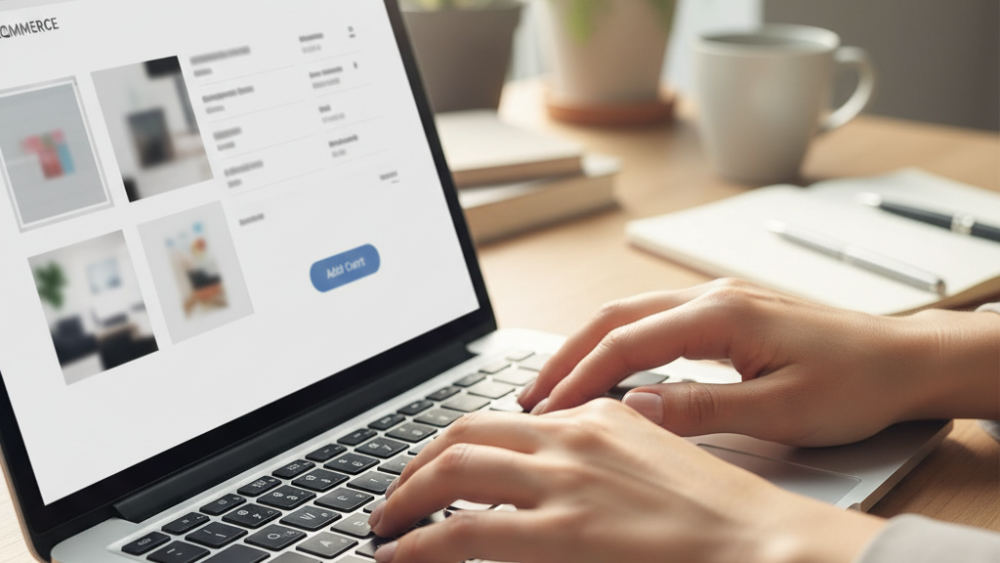
Setting up a store is faster than you think. Just follow the process.
1. Sign up for the platform with your email and business name
Freewebstore and Payhip don't require a credit card. If a platform asks for one on a "free" plan, be careful. They're either verifying your identity or getting ready to bill you for an upgrade.
2. Pick a template or theme that matches your product type
Choose a design for physical goods, digital downloads, or services. Many platforms use AI to suggest a template, which is a good starting point. Don't overthink it.
3. Add your products with titles, descriptions, prices, and photos
Some platforms have AI tools to help write descriptions. This is a huge time-saver for big catalogs. Use clear photos. Write titles that say what the thing is. Set prices that cover your costs, those payment processing fees, and your profit.
4. Set up payment processing by connecting Stripe, PayPal, or both
You'll need to confirm your account is approved for US payments. Both Stripe and PayPal require identity verification, so have your tax ID and bank details handy. Do this before you start.
5. Configure shipping zones and rates for US carriers
Add your options for USPS, UPS, and FedEx. If you're local, enable in-store pickup. Before you launch, check your rates against the carrier calculators. Losing money on every single shipment is a fast track to failure.
6. Test the checkout process by placing a test order yourself
Verify everything. Payments. Confirmation emails. Order records. Walk through the entire process like a customer. What looks good in the builder can break the moment real money is involved.
7. Go live by publishing the store and sharing the link
Freewebstore says you can have a live store in ten minutes. Most people I know get their first one up in an afternoon. Your timeline really depends on whether your photos, descriptions, and pricing are ready to go.
What Happens After the Sale Decides Your Revenue

The sale isn't the finish line. It's the starting gun. This is where you decide if you're building a real customer or just processing a one-time transaction.
An order should become a contact. Not just another line item in a dashboard. This is the single biggest mistake I see. Most free store builders treat every sale like an isolated event, and it's why most of those stores die. The real money is in abandoned cart recovery, automated email and SMS follow-up, review requests, and repeat purchases. No free platform includes that.
This is why Launch CART lives inside Launch CRM. Every order automatically creates a contact record with email, SMS, sales pipelines, invoicing, and review requests already attached. One system. No extra logins. That native connection between store and CRM is something no standalone free builder can offer. Turning first-time buyers into repeat customers demands a system that works for you. A system that asks for the review and reminds them to buy again.
Where the money is: Post-sale follow-up is where repeat customers come from. Orders should become contacts and trigger automated follow-up, not just sit in a dashboard.
With Launch ADS, we feed ad performance data right back into Launch CRM. You see which campaigns brought in actual customers, not just worthless clicks. That connection between your ad spend and customer value is impossible when your store and CRM are two different tools. The businesses that grow fastest don't always have the best product. They have the best follow-up.
When Free Stores Are the Wrong Choice
Free isn't always the right answer. Sometimes, it's the most expensive choice you can make.
If you run a service business like a contractor, salon, or clinic, ask yourself if you even need a store. Maybe what you really need are gift cards, service packages, and appointment booking. You can sell all of that without stocking a single physical product. If you do have a huge catalog, you'll need bulk import tools and better ways to manage categories and photos. The simple "add-three-products" demo every free platform shows won't cut it.
Those "fair use" policies are another red flag. They mean the platform can pull the plug on you anytime they want. And don't get me started on stores built on rented land like Facebook Shops or Instagram. Your entire business can vanish overnight because of a policy change. I know because it happened to me. I was banned from Facebook and lost a following of 15,000 people in a single day. I learned that lesson the hard way.
If your business needs a real system connecting your CRM, email, SMS, ads, and booking, then get one. A full commerce ecosystem that replaces ten separate logins will save you more money than a "free" store ever could. One login for your store, funnels, booking, invoicing, courses, and memberships. It changes the entire equation.
Free Store Launch: Ready to Turn Orders into Customers
You can get an online store live for $0. It's true. Pick a platform, choose a template, add your products, and go live in an afternoon.
But truly free and unlimited is rare. Freewebstore, Payhip, and Shopead are your best bets, but you have to read the fine print. Budget for payment processing on every single sale. Plan on buying a custom domain. Expect to pay for upgrades as you grow. A free store still costs money, just not upfront.
The real work starts after the sale. Orders should trigger follow-up. They should generate reviews. They should turn into repeat business. That's where a store connected to a CRM leaves a standalone builder in the dust.
If you want your store to be the engine of your business instead of a dead-end transaction tool, Launchcrm and start turning orders into customers for life.
Frequently asked questions
How to create a free online store with unlimited products?
Sign up for a platform like Freewebstore, Payhip, or Shopead that offers unlimited products on its free plan. Pick a template, add your products, connect payment processing, configure shipping, and publish the store. Verify there are no product caps or fair use policies that might limit your listings later, and test the checkout process before you share the link.
Is a free online store really free?
The platform itself may be free, but you still pay payment processing fees on every sale, typically around 2.9% plus 30 cents. A custom domain costs around $15 per year if you want to replace the free subdomain. Upgrade fees kick in when you need features like abandoned cart recovery or custom email, so free turns into paid as you grow.
Which e-commerce platform supports unlimited products?
Freewebstore offers unlimited products on its free forever plan with no credit card required. Payhip provides unlimited products on its forever-free plan, ideal for digital sellers. Shopead allows unlimited listings subject to fair use, meaning the platform can limit you if they decide you're abusing the system, so truly unlimited comes with a catch.
How many products can I sell on a free ecommerce plan?
Freewebstore and Payhip allow unlimited products with no caps. Ecwid's free plan caps at 5 products and Big Cartel's free plan also caps at 5 products. WooCommerce has no product cap but requires paid hosting, about $6.45 per month with Bluehost, so the software is free but the store is not.
Can I start a free online store without a credit card?
Yes, Freewebstore and Payhip both allow you to start with no credit card required. Other platforms may ask for payment details even on free plans to verify your identity or prepare for upgrades. Read the signup screen carefully to understand what you're committing to before you enter any payment information.
How long does it take to build a free online store?
Freewebstore claims a live store in about ten minutes and that most people get their first store live in an afternoon. The actual time depends on how many products you add and whether you have your photos, descriptions, and pricing ready. Testing the checkout process and configuring shipping adds another hour or two for most US sellers.
Can I run Facebook or Google ads to a free online store?
Yes, you can run ads to any live online store as long as it has a working checkout and meets the ad platform's policies. Ad performance flows back into the platform better when the store is connected to a CRM like Launch CRM, which tracks which campaigns produced real customers, not just clicks. That closed loop between spend and revenue is invisible when your store and your ads are separate systems.