
E-commerce Shopping Platforms Selection Guide
Last updated September 3, 2026
An ecommerce platform is the software engine that lets you build a store and manage marketing, sales, and operations under one roof. These systems run the gamut from basic shopping cart plugins to massive all-in-one toolkits handling product catalogs, inventory, customer relationships, and automated follow-ups.
Table of contents
- Key takeaways
- Understanding Modern E-commerce Platform Brands
- Matching Software to Your Specific Sales Model
- The Hidden Cost of the Disconnected Tool Stack
- American Built Commerce and Unified Systems
- Using First-Party Data to Identify Anonymous Visitors
- When Traditional E-commerce Software Falls Short
- Choosing the Right Foundation for Growth
- Frequently asked questions
Key takeaways
- Cost creep is real. Most platforms charge a monthly fee but require extra paid apps for email, SMS, and CRM functions.
- Shopify leads retail. Shopify is the industry standard for general retail with over 1 million active stores.
- Enterprise scale. BigCommerce and Magento serve high-volume sellers needing complex infrastructure and technical control.
- Integrated American alternative. Launch CRM provides a made in USA alternative that integrates the store, CRM, and AI voice agents natively.
- Data ownership matters. First-party data collection allows you to track anonymous visitors before they reach the checkout page.
Understanding Modern E-commerce Platform Brands
Selecting e-commerce platform brands requires matching their specific feature sets to your business growth stage and technical skill level. An e-commerce platform acts as your digital foundation. It houses your website builder, product catalog, inventory management, and customer support. Shopify is the standard recommendation for ease of use. At a $29 monthly entry point, it is praised as an all in one seller for anyone wanting a polished store without a steep learning curve.
If you prioritize a unique visual layout, Wix eCommerce offers a design-first approach and was ranked as the runner-up in one directory roundup. Squarespace is another design focused builder many small business reviewers recommended for smaller, visual brands and pay processing needs. If you are already running a WordPress site, WooCommerce is a common shopping cart plug-in. It provides deep customization through its open-source framework, serving as one of the most common self hosted store builders for those who want total control.
According to a Independent ecommerce platform review, you need to look for four core features: a website builder, a product catalog, inventory management, and customer support. Beyond those basics, consider how the software handles your specific niche, whether you are selling physical goods, digital downloads, or professional services.
Matching Software to Your Specific Sales Model
Choosing from the e commerce platforms in usa requires identifying whether you need a lightweight tool or an enterprise solution. High-volume sellers often turn to BigCommerce, which is reviewed as the best fit for large volume sellers and store building that works with third party infrastructure. Technical merchants with complex requirements might prefer Magento, now known as Adobe Commerce. It offers open-source flexibility used by more technical merchants and large catalogs, but you will need significant developer resources to keep it running.
Creators selling digital products or simple merch often choose specialized e commerce software list options like Sellfy. This platform is rated for creators who need simple distribution of digital files without unnecessary overhead. If you already have a website, Ecwid by LightSpeed acts as a lightweight shopping cart storefront tool. For artists with simple needs, Big Cartel provides a free or very low cost option. Meanwhile, Shift4Shop offers a low-cost entry plan for merchants who want a dedicated platform that appears frequently in comparison round-ups.
Selecting the right tool means matching the scenario to the logo. As noted in a Use case based ecommerce cart and platform, the shortlist changes based on whether you need to start fast, sell in person, or run high volume. Don't buy more engine than you can drive.
The Hidden Cost of the Disconnected Tool Stack
Finding the right ecommerce software for small business involves calculating the true cost of connecting multiple third-party applications. Most owners stack software like gym memberships. They pay separate fees for a store, an email tool, an SMS platform, and a CRM. This duct tape approach leads to data silos where the store doesn't talk to the marketing tools. You lose track of customer behavior. When systems are disconnected, you miss the chance to trigger a specific text message when a high-value customer browses a new category.
Practical Rule: The best tool isn't the one with the most features, but the one that talks to your other systems natively.
Monthly costs for a store can quickly balloon to hundreds of dollars once you add plugins for reviews, abandoned carts, and lead capture. We regularly see owners overspending on marketing because they are pouring traffic into a leaky bucket. Leads fall through the cracks between apps. Consolidating these functions into one system ensures your purchase history and customer records live in one database. By using an integrated system, you can connect with American built tools to replace multiple expensive subscriptions with a single cohesive environment.
American Built Commerce and Unified Systems

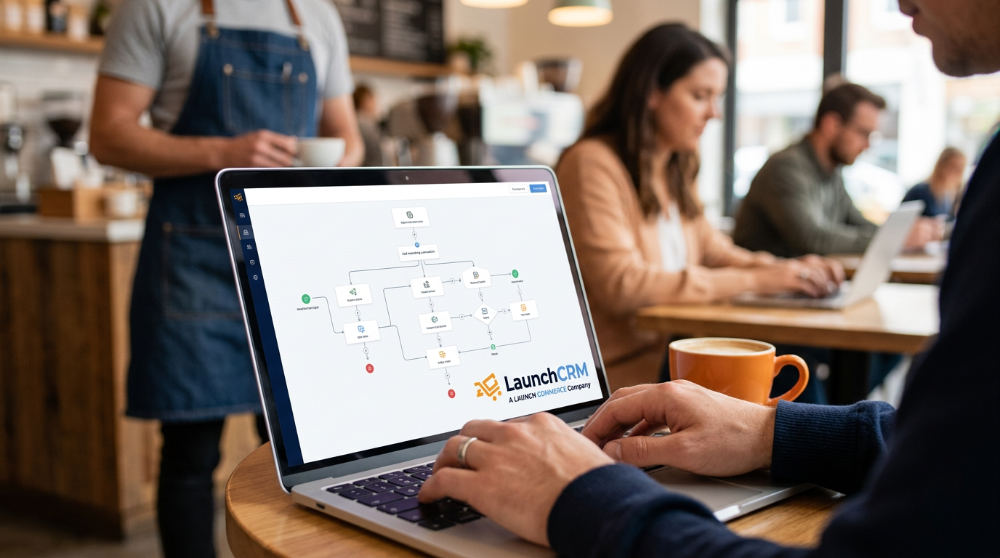
Launch CRM is a made in USA platform that serves as an all-in-one business system. It differs from international competitors by keeping its ownership and support on American soil. This system includes CRM, contact flows, email, SMS, automations, and a native online store. This integrated approach prevents the technical friction that occurs when different software providers update their code at different times, a common issue that breaks the connection between your store and your email list.
For service-based businesses, the platform bridge allows an online store to live in the same sales funnel as appointment scheduling and property management. You might sell a physical product today and a consulting session tomorrow. Both transactions should feed the same customer profile. Choosing a platform founded on values like freedom and ownership protects you from being debanked or losing access to your data.
We built this because we have seen how relying on technology you do not control can end a business overnight. Keeping your commerce, ads, and customer data under one roof helps you maintain true independence. You can view our American built commerce solutions to see how native integration works in practice.
Using First-Party Data to Identify Anonymous Visitors
Most shopping cart software only identifies a customer after they check out. This leaves you blind to the other 98 percent of your traffic. Using first party pixel data allows you to identify anonymous website visitors and turn them into named, followable leads in the same commerce system. This data advantage allows you to build retargeting audiences based on real intent rather than just general browsing behavior.
- Identify early. Turn window shoppers into leads before they even reach the cart.
- Trigger AI. Use AI voice agents to answer questions the moment a visitor shows interest.
- Own the pixel. Protect your marketing from the phasing out of third-party cookies by major browsers.
By identifying visitors early, you can trigger automated responses or AI voice agents to answer questions before a prospect leaves your site. Owning your pixel data ensures your marketing remains effective even as tech giants change the rules. In one case, businesses using our specialized ad systems cut their cost per lead from $27 down to $9 just by using better data targeting.
When Traditional E-commerce Software Falls Short
Standard platforms often fail local service businesses that need to handle physical products and phone inquiries simultaneously. If your business loses revenue to unanswered calls, a sold-out commerce platform without AI receptionists cannot catch those missed opportunities. Small local service businesses often lose more revenue to unanswered phones than to bad marketing.
Watch Out: Relying on one payment processor is the mistake most likely to end your company rather than just slowing it down.
Many popular builders share your customer data with advertising partners. This can compromise your relationship with your buyers. Relying on a single payment processor is also a massive risk. If your account is frozen, your storefront is effectively dead. Moving a customer list between platforms can damage your email deliverability if the new system doesn't integrate with your existing data. We recommend payment redundancy so a single policy change doesn't stop the cash register for good.
Choosing the Right Foundation for Growth
The 16x Formula shows that modest gains in leads, conversion, and repeat buyers multiply into massive growth. You do not need a marketing miracle. If you double your leads, conversion, frequency, and retention, you have transformed the business. Focus on plugging the leaks in your current funnel by automating reviews and follow-ups before you invest in more expensive ad traffic.
Select a platform that offers redundancy in payments and full ownership of your customer list. Successful implementation beats a perfect design every time. Choose the tool that lets you go live and start collecting payments today. If you want to grow, stop buying more traffic and start fixing the bucket you already have by exploring our comprehensive business growth platform.
Frequently asked questions
What are the best e-commerce shopping platforms for small businesses?
Shopify and Wix are popular choices for those starting out due to their user-friendly templates. Squarespace is ideal for small businesses with a heavy focus on visual branding and design. Launch CRM is best for American small businesses that want their CRM and marketing tools integrated with their store.
Which e-commerce platforms are made in the USA?
Launch Commerce is a primary example of a made in USA platform with American-based technology and support. Many major platforms like Shopify are headquartered internationally, which can impact where your data is stored and how support is handled. Using domestic software ensures your data follows American privacy and ownership standards.
How many extra apps should a small business really subscribe to?
The average merchant often pays for 5 to 10 separate apps for email, reviews, and SMS. You are likely overpaying if your monthly app fees exceed the cost of your primary platform subscription. Switching to an all-in-one system can eliminate the need for most third-party subscriptions and reduce technical friction.
Can one platform handle digital products and in-person selling?
Platforms like Square and Shopify specialize in bridging the gap between physical retail and online storefronts. Specialized tools like Payhip or Sellfy are better suited for creators who only sell digital downloads. Integrated platforms like Launch CRM can handle physical goods, digital products, and service appointments in one place.
What happens to my data if I delete my online store platform?
Most platforms will delete your product and customer data permanently after a short grace period. It is critical to export your customer email list and order history before closing an account to maintain ownership of your business records. Choosing a platform that emphasizes data ownership helps prevent loss during transitions.