
Customer Retention Strategies That Stop Revenue Leaks
Last updated November 15, 2026
Most businesses pour money into traffic while losing customers through four holes in the bottom of the bucket. These nine customer retention strategies use AI and automation to plug those leaks before you spend another dollar on ads.
Table of contents
- 1. Fix the speed to lead gap with dynamic routing to prevent immediate churn
- 2. Deploy AI agents to cover the hours when your team is not working
- 3. Use hyper personalization to move beyond basic transactional relationships
- 4. Establish a clean CRM moat through continuous contact enrichment
- 5. Implement predictive segmentation to anticipate customer needs
- 6. Use omnichannel messaging to meet customers where they already are
- 7. Continuously test and refine your email retention strategies
- 8. Incentivize social shares to build a community around your brand
- 9. Protect your customer loyalty programs from fraud to maintain trust
- How to transition from manual spreadsheets to automated CRM systems without losing data
- Building an ecommerce launch strategy that prioritizes Day 1 retention
- Which metrics actually matter for measuring retention success in a small business
- Frequently asked questions
1. Fix the speed to lead gap with dynamic routing to prevent immediate churn
Automate instant replies so leads don't go to a competitor while your staff is manually checking spreadsheets. The longer a potential customer waits for your response, the higher the chance they've already moved to the next name on their list.
For businesses getting thousands of inquiries a month and relying on manual spreadsheet lookups, the delay between inquiry and response means leads have already chosen a competitor by the time you type the first word. Use dynamic SLA routing to ensure high value inquiries reach the right team member immediately based on promised response times. SLA Routing directs leads based on promised response times to ensure no customer is ignored.
Integrate your lead data directly with your CRM to eliminate the delay of manual data entry that kills retention before the relationship even starts. A CRM serves as the central operating system used to track customer interactions and manage retention workflows, feeding automated responses the second a lead comes in rather than sitting idle while someone moves away from manual spreadsheets. Speed often decides the sale more than the quality of the pitch.
2. Deploy AI agents to cover the hours when your team is not working

Install AI voice agents to answer phones and book appointments 24 hours a day so no call goes to voicemail and then to your competitor. Small local service businesses lose more revenue to unanswered phones than to bad marketing. The lead called, nobody picked up, and they called the next name on the list before the voicemail even finished.
Let AI handle the initial qualification so your team only spends time on serious customers who are ready to buy. Launch Commerce provides done for you AI employees, meaning business owners don't have to configure complex automation themselves. We install it, train it on your business, and hand you the keys. You get an AI receptionist answering calls, booking appointments, and following up on leads while you sleep without writing a single line of code or watching a tutorial.
3. Use hyper personalization to move beyond basic transactional relationships
Tailoring communications to specific customer behaviors and needs rather than sending the same message to everyone produces data driven strategies that actually work. Avoid bored or transactional interactions by using data to acknowledge the customer's history with your brand and their specific pain points.
Personalize the post purchase experience to ensure the customer feels valued rather than just another invoice in your accounting software. Businesses that implement personalized follow up see higher repeat purchase rates because the customer knows you remember them.
Retaining a customer is 5x cheaper than bringing a new customer on board, according to BLOG, so spending the time to personalize each touchpoint pays back faster than any acquisition campaign. A CRM that segments based on behavior lets you send the right message to the right customer at the right time instead of blasting everyone with the same email. The follow up is where the money is. It's the first thing that gets abandoned when owners treat every customer like a number.
4. Establish a clean CRM moat through continuous contact enrichment
Keep your database healthy by automatically updating customer profiles as their needs evolve and their engagement with your brand changes. Use first party pixel data to identify anonymous visitors who have already engaged with your site and turn them into contactable leads with enriched profiles.
Turn enriched lead profiles into targeted follow up campaigns that keep your brand top of mind without requiring manual list management. Launch Data uses first party pixel data to identify anonymous website visitors that other retention tools miss, feeding those enriched profiles straight into your CRM for automated follow up.
Instead of watching traffic disappear into the void, you capture names and details the moment someone shows intent, then build a relationship before they ever fill out a form. Enrichment can turn a stagnant list into a growing asset. The single fastest money in most businesses is already in the database. Enrichment makes sure that database stays current and actionable instead of rotting in a spreadsheet.
5. Implement predictive segmentation to anticipate customer needs
Use data science to harness insights that predict when a customer is ready to buy again or when they're at risk of churning. Group customers into cohorts to analyze which behaviors lead to the longest retention cycles and the highest lifetime value. Cohort Analysis lets you observe the behavior of specific customer groups over time and adjust your retention approach based on real patterns rather than guesses.
Shift from reactive support to proactive outreach based on predicted customer life cycles so you reach them before they start shopping around. Predictive Segmentation is a data driven strategy to categorize customers based on their future likely actions, and it beats batch and blast email every time.
Instead of waiting for a customer to complain or disappear, you reach out with a re engagement offer at the exact moment the data says they're cooling off. Predictive segmentation is a powerful tactic that can help change customer behavior before the problem shows up in your revenue.
6. Use omnichannel messaging to meet customers where they already are
Adopt platforms like WhatsApp or SMS to provide faster, more direct support than traditional email that sits unread for hours or days. Ensure the customer journey is seamless across every device and messaging app they use so they never have to repeat themselves.
Use automated chat commerce to allow customers to buy directly within the conversation without clicking through to a separate checkout page. Service businesses like HVAC or medical practices see higher booking rates when they let customers confirm appointments via text rather than requiring a phone call or email reply.
WhatsApp is a messaging platform used for automated customer journey interactions and chat commerce, and it fits naturally into a retention stack because that's where your customers already spend their day. Omnichannel messaging reduces friction and keeps conversations moving. If email feels like a chore to your customer, text feels like a normal part of their routine. That difference shows up in response rates.
7. Continuously test and refine your email retention strategies
Stop using a one size fits all email approach and start split testing subject lines, send times, and offers to see what actually gets opened and clicked. Monitor engagement metrics to see which segments are cooling off and require a re engagement campaign before they disappear entirely.
Automate the delivery of discount coupons and upcoming offers to keep customers in the loop without requiring manual sends every week. A CRM that tracks customer interactions and manages retention workflows makes testing faster because you can see which messages led to repeat purchases and which ones got ignored.
The data tells you whether your customers respond better to a 10 percent discount or free shipping, and whether Tuesday morning or Friday afternoon gets more opens. Research emphasizes that email remains one of the highest ROI retention channels when you treat it like a living experiment instead of a set it and forget it broadcast. Testing turns guesswork into a repeatable system that improves every month.
8. Incentivize social shares to build a community around your brand

Offer rewards or recognition to customers who share their positive experiences on social media so your retention efforts multiply through word of mouth. Focus on creating a customer community where users feel they belong to something bigger than a transaction.
Leverage user generated content to provide social proof for potential repeat buyers who want to see real people using and recommending your product. Our software is American built and founded on the values of faith, family, and freedom, which resonates with local service business owners who want to support brands that share their principles.
When customers become advocates, they stick around longer because their identity is now tied to your success. Research shows that community driven retention costs less than paid ads and generates more trust. A customer who tags you in a post is highly valuable, and they often bring their friends along for the ride.
9. Protect your customer loyalty programs from fraud to maintain trust
Audit your reward systems to ensure bad actors aren't exploiting your retention incentives through fake accounts or referral abuse. Maintaining program integrity is essential for keeping the trust of your most loyal advocates who earned their rewards legitimately.
Ensure that earned rewards are secure and easy for legitimate customers to redeem without jumping through hoops or waiting weeks for approval. A loyalty program that feels rigged or unfair will drive customers away faster than having no program at all.
When fraud creeps into a points system or referral bonus, legitimate customers notice and assume the brand doesn't care enough to protect their investment. Program integrity is a make or break factor in retention. Trust takes months to build and seconds to destroy. A single fraud scandal can wipe out years of goodwill.
How to transition from manual spreadsheets to automated CRM systems without losing data
Export your current spreadsheet as a CSV file and map each column to the corresponding field in your CRM during import so nothing gets lost in translation. Run a test import with a small batch of contacts first to confirm the data lands in the right place before you commit the full list.
Set up automated workflows immediately after import so your newly centralized list starts receiving follow up, reminders, and re engagement campaigns without delay. Launch CRM replaces multiple separate tools most small businesses are currently paying for, making retention easier to manage in one place.
For education businesses or service providers getting thousands of inquiries a month and relying on staff to reply manually using data from spreadsheets, the platform can set up instant replies, route serious customers to the right team based on Service Level Agreement routing, and integrate directly with your existing spreadsheet data. Moving from manual to automated doesn't require firing anyone. AI adds capacity so the same team can handle more volume and catch what used to fall through the cracks. You can transition to modern systems and start retaining customers the day you finish the import.
Building an ecommerce launch strategy that prioritizes Day 1 retention
Most ecommerce brands focus their launch plan entirely on acquisition and treat retention as something to worry about later. That's backward. Build your post purchase email sequence, your review request automation, and your win back campaign before you spend a dollar on traffic.
Set up predictive segmentation so you can identify which first time buyers are most likely to become repeat customers and which ones need a nudge. Turn on automated SMS and email follow up for cart abandonment, browse abandonment, and post purchase thank you messages so every visitor gets a second chance to convert.
Launch your loyalty program on Day 1 so early adopters feel rewarded for taking a chance on a new brand. Track cohort performance from the start so you know which acquisition channels bring buyers who actually stick around versus one time bargain hunters.
A proper ecommerce launch strategy that prioritizes long term growth from the first transaction costs the same to execute and generates far higher lifetime value than bolting retention on six months later. Retaining a customer is 5x cheaper than bringing a new customer on board, so every dollar you invest in Day 1 retention pays back faster than another round of cold traffic. This is why the real battle isn't traditional retention but building engagement from the start.
Which metrics actually matter for measuring retention success in a small business
Repeat purchase rate tells you what percentage of customers come back for a second order. Customer lifetime value measures how much a buyer spends with you over the entire relationship, not just the first transaction. Churn rate tracks how many customers you lose each month. If churn is higher than new customer acquisition, you're shrinking no matter how much traffic you buy.
Time between purchases shows you whether your follow up is working. If the gap is widening, your retention campaigns aren't landing. Net Promoter Score asks whether customers would recommend you. It's a leading indicator of retention because people who refer friends tend to stick around themselves.
Response time matters more than most owners think. Speed to lead decides whether the inquiry becomes a customer or goes to the next name on the list. Track these six numbers every month and you'll know whether your retention engine is getting stronger or leaking revenue. A CRM gives you all six metrics in one dashboard instead of requiring manual spreadsheet math.
Frequently asked questions
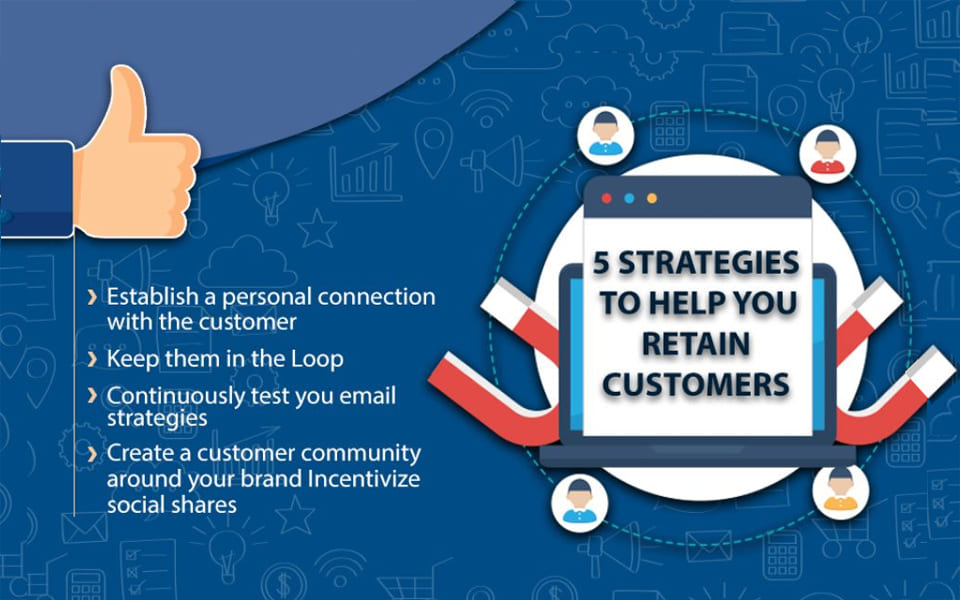
Image source: blog.datacaptive.com
What are the best customer retention strategies for small businesses?
Fix speed to lead with automated responses so inquiries get answered immediately instead of waiting hours for a manual reply. Deploy AI voice agents to cover after hours and busy periods so no call goes unanswered and no opportunity is lost to a faster competitor. Use predictive segmentation to identify which customers are about to churn and reach them with a targeted re engagement offer before they leave.
How can CRM help with customer retention?
A CRM is the central operating system used to track customer interactions and manage retention workflows across email, SMS, phone, and web visits. It automates follow up sequences so every customer gets timely reminders, offers, and check ins without requiring manual work from your team. It segments your list based on behavior so you can send the right message to the right customer at the right time instead of blasting everyone with the same email. Launch CRM consolidates contacts, pipelines, email marketing, SMS, appointment booking, and workflow automation in one platform so retention doesn't require logging into six different tools.
What automation helps keep customers coming back?
Automated post purchase thank you sequences that ask for a review, offer a referral incentive, or introduce a complementary product. Win back campaigns that trigger when a customer hasn't purchased in 60, 90, or 120 days, depending on your typical buying cycle. Automated appointment reminders and rebooking prompts that reduce no shows and keep the calendar full without manual phone calls.
Which digital assistants are best for customer-facing businesses?
AI voice agents that answer the phone, qualify leads, and book appointments 24 hours a day work well for service businesses like HVAC, medical practices, and contractors. AI chat agents that handle WhatsApp, SMS, and website chat simultaneously let ecommerce and professional service businesses scale customer support without adding headcount. Launch AI Workforce installs and configures done for you AI employees so business owners don't have to build the automation themselves.
How can I set up instant replies if my business currently uses spreadsheets?
Import your spreadsheet as a CSV into a CRM that supports automated workflows and map each column to the corresponding contact field. Build an automated reply workflow that triggers when a new lead is added, sending an instant SMS or email confirmation while your team reviews the details. Connect your lead capture form directly to the CRM so new inquiries flow straight into the system and trigger the instant reply without touching a spreadsheet. For businesses handling thousands of inquiries a month with manual replies, switching to automated instant responses can cut lead response time from hours to seconds.
What is the best platform for routing serious customers to the right sales team automatically?
A CRM with SLA routing automatically assigns incoming leads to the right team member based on factors like lead source, inquiry type, geographic location, or deal value. Service Level Agreement routing ensures high value inquiries are answered within a guaranteed response time so no serious customer waits longer than your competition. Launch CRM includes workflow automation and dynamic assignment rules that route leads based on the criteria you define, with no manual sorting required.
How does an ecommerce launch strategy differ for retention versus acquisition?
An acquisition focused launch strategy prioritizes traffic, conversion rate, and first purchase metrics like cost per acquisition and return on ad spend. A retention focused launch strategy builds the post purchase experience first, including automated thank you sequences, review requests, loyalty rewards, and win back campaigns. Retention metrics like repeat purchase rate, customer lifetime value, and time between purchases matter more than traffic volume because a smaller list of repeat buyers generates more revenue than a large list of one time buyers. Understanding the fundamental difference in planning helps you build a launch plan that balances both instead of treating retention as an afterthought.
The nine strategies above work because they fix the actual leaks instead of just pouring more leads into a broken bucket. If you want help setting up automated retention workflows that capture the customers you already paid to acquire, reach out to our team for support in implementing these strategies.