
CRM Software for Small Businesses: Statistics That Matter
Last updated October 29, 2026
Small businesses are discovering what the data already shows: the right CRM software for small businesses transforms operations, closes more deals, and eliminates the chaos of juggling spreadsheets and lost leads. These eleven statistics, drawn from industry research and platform data, show you exactly what Customer Relationship Management Software delivers for small businesses in 2026.
Table of contents
- 1. Many small businesses find themselves juggling spreadsheets and lost leads, highlighting the need for a dedicated CRM solution
- 2. Over 25 CRM tools are available for small businesses, indicating a broad market with diverse options to choose from
- 3. Many small businesses adopt CRM to consolidate multiple tools, saving money and simplifying their tech stack
- 4. CRM software supports your sales team by streamlining processes and prioritizing leads effectively
- 5. The right CRM helps small businesses improve customer service by centralizing all customer interactions and data
- 6. Automating mundane tasks through CRM workflows significantly boosts efficiency for small business teams
- 7. Cloud-based CRM solutions offer essential mobile access, allowing small business owners to manage customer relationships from anywhere
- 8. User-friendly interfaces are paramount for small businesses to ensure quick adoption and efficient use of CRM software
- 9. Integration with existing tools is a critical feature for small business CRMs to ensure a seamless workflow
- 10. Cost-effectiveness, including genuinely usable free plans or affordable entry tiers, is a key consideration for small businesses choosing a CRM
- 11. CRM solutions help small businesses adapt to growth by providing scalability and flexibility
- How to Choose the Right CRM for Your Small Business
- Common Mistakes Small Businesses Make When Implementing CRM Software
- Measuring the ROI of Your CRM Investment
- Frequently asked questions
1. Many small businesses find themselves juggling spreadsheets and lost leads, highlighting the need for a dedicated CRM solution
The spreadsheet approach breaks down as soon as you have more than a handful of customers and leads to track. Lost leads represent real revenue walking out the door because nobody followed up at the right time. A dedicated CRM centralizes every customer interaction, purchase history, and communication record in one searchable place. When your team can access the complete customer story in seconds, you close more deals and deliver better service.
The difference between a business that captures every lead and one that lets them slip away isn't effort. It's having a system that works when you're busy doing everything else. A proper CRM makes sure nothing falls through the cracks, even on your most chaotic days.
Source: 25+ CRM Tools For Small Business
2. Over 25 CRM tools are available for small businesses, indicating a broad market with diverse options to choose from
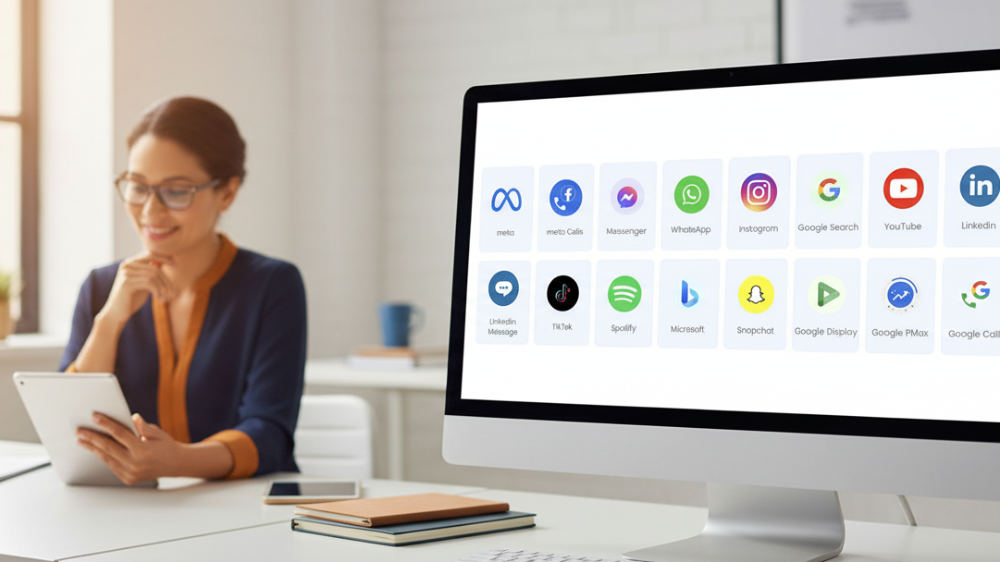
The sheer number of options means you can find a CRM that fits your specific industry, budget, and workflow. This market diversity also means you need clear criteria to avoid choice paralysis and wasted trials.
The best CRM for your business is the one that consolidates the most tools you're already paying for separately. Launch CRM replaces contacts, pipelines, funnels, websites, email and SMS marketing, appointment booking, and an online store in one platform built for American businesses. You stop paying for six different subscriptions that don't talk to each other and start working from one dashboard that sees your entire operation. Most small businesses waste more money on disconnected software than they realize, and they waste even more time logging into all of it.
Source: 25+ CRM Tools For Small Business
3. Many small businesses adopt CRM to consolidate multiple tools, saving money and simplifying their tech stack
Most small businesses are paying for a scheduler, an email tool, a text tool, a funnel builder, a review tool, and a CRM that don't talk to each other. Consolidating these into one platform cuts subscription costs and eliminates the daily task of logging into six different systems. A unified platform prevents data silos and ensures every team member sees the same customer information.
Launch CRM natively connects with an eCommerce store builder, email, SMS, and our AI Ads Platform, providing a truly unified ecosystem where ad performance flows directly into your customer records. You see which campaigns produced real customers, not just clicks. That visibility changes how you spend money, because you stop guessing and start knowing what works. This represents one of the key benefits of CRM for small business operations.
Source: 25+ CRM Tools For Small Business
4. CRM software supports your sales team by streamlining processes and prioritizing leads effectively
A well-managed sales pipeline helps you identify which deals have been sitting too long and which leads deserve your attention first. Automating mundane tasks frees your sales professionals to focus on selling instead of data entry. Access to complete customer history during calls means your reps are always informed and prepared. Tracking sales activities and forecasting becomes simple when every interaction is logged in one place.
The difference between a sales team that hits quota and one that constantly scrambles is often just the visibility a good CRM provides. Your pipeline shows you exactly where the bottlenecks are and which deals need a push today. That clarity turns into closed business.
Source: The 8 Best CRM Software for Small Business (2025)
5. The right CRM helps small businesses improve customer service by centralizing all customer interactions and data
A 360-degree view of the customer means you can personalize every interaction based on preferences, purchase history, and past conversations. Quick access to important information during service calls improves your responsiveness and makes customers feel heard. You can send targeted communications like birthday discounts or renewal reminders to loyal customers without manual tracking.
Centralized data prevents the embarrassment of asking customers to repeat information they already gave to someone else on your team. When a customer calls and you already know their story, you look professional and attentive. When you ask them to start over because the last person forgot to write it down, you look disorganized. The CRM is the difference.
Source: Best CRM for Small Businesses
6. Automating mundane tasks through CRM workflows significantly boosts efficiency for small business teams
Workflow automation handles follow-up emails, appointment reminders, and data entry so your team can focus on higher value activities. Automated processes ensure no lead falls through the cracks and every customer gets consistent treatment. This reduces manual errors that cost you deals and waste time fixing later.
Our AI Workforce offering integrates directly with Launch CRM, allowing businesses to handle more volume and improve lead follow-up without hiring more staff through AI voice agents and an AI receptionist. The AI answers calls after hours, books appointments, and follows up on leads while your team is off the clock. You don't replace people. You extend what your existing team can cover.
Source: The 8 Best CRM Software for Small Business (2025)
7. Cloud-based CRM solutions offer essential mobile access, allowing small business owners to manage customer relationships from anywhere
Mobile access means your sales team can work remotely, update records from customer sites, and close deals on the go. Cloud-based operation eliminates the need for on-premise servers, reducing IT costs and maintenance headaches. Your data is always up to date across every device, so nobody is working from outdated information.
This flexibility is crucial for small businesses that may not have dedicated IT staff or the budget for infrastructure. A field tech who can check a customer's service history from their phone before they knock on the door shows up prepared. An office worker stuck waiting for someone to get back to their desk loses time and momentum. This makes cloud-based CRM for small business operations particularly valuable.
Source: Best CRM for Small Businesses
8. User-friendly interfaces are paramount for small businesses to ensure quick adoption and efficient use of CRM software
A simple, intuitive interface reduces the learning curve so your staff can start using it this week, not next quarter. Ease of use encourages consistent data entry, and a CRM is only as valuable as the data inside it. Complex systems lead to low adoption rates, which means you paid for software nobody uses.
When the CRM is easy to navigate, you minimize training time and support tickets. Your team will actually open the system every morning instead of continuing to scribble notes in a notebook or leave important details buried in their email inbox. The best technology is the technology people will actually use, and simplicity wins that battle every time.
Source: Best CRM for Small Businesses
9. Integration with existing tools is a critical feature for small business CRMs to ensure a seamless workflow
A CRM that integrates with your email, calendar, accounting, and marketing tools prevents data from getting trapped in silos. Seamless integration ensures information flows effortlessly between applications without manual export and import. This reduces errors and saves the hours each week your team spends copying data between systems.
Launch CRM's native connection with Launch Ads means you can see which campaigns produced real customers (not just clicks) and retarget leads using first-party pixel data that identifies anonymous website visitors. That visibility turns advertising from a guessing game into a system you can measure and improve. When your CRM talks to your other tools automatically, you eliminate the friction that kills momentum.
Source: Best CRM for Small Businesses
10. Cost-effectiveness, including genuinely usable free plans or affordable entry tiers, is a key consideration for small businesses choosing a CRM
Small businesses have tighter budgets, making low-cost CRM small business options attractive for testing before committing. Transparent pricing without hidden onboarding fees or surprise charges helps you budget accurately. The value you get from core features should justify the investment, even at minimal cost. A low entry barrier lets you test whether the system fits your workflow without significant financial risk.
Some platforms offer a free tier that works perfectly for a solo operation or a small team just getting started. Others charge reasonable monthly fees but replace three or four separate subscriptions you're already paying for, which means the net cost is zero or even negative.
Source: The 11 best low-cost CRMs for small businesses
11. CRM solutions help small businesses adapt to growth by providing scalability and flexibility
A good CRM offers pricing tiers and features that scale with your growing customer base and team size. It provides a structured way to manage increasing customer interactions without the system collapsing under the load. Scalable CRMs prevent you from outgrowing your system and facing a costly, disruptive migration two years from now.
The flexibility to add users, features, and integrations ensures the CRM remains relevant as your business evolves. Starting small and scaling up as you grow means you're not paying for capacity you don't need yet, but you're also not locked into a dead end that forces you to rip everything out and start over when you hit a ceiling.
Source: Best CRM for Small Businesses
How to Choose the Right CRM for Your Small Business
Start by listing every tool you currently pay for: scheduler, email platform, text messaging service, funnel builder, review manager, and contact database. The best CRM for your business is the one that replaces the most items on that list with a single login and a single monthly bill. Look for native integrations, not just API connections that require a developer to maintain. Test the interface with your actual team members, not just yourself, because adoption depends on whether they'll actually use it daily.
Verify that the CRM can capture and act on first-party data from your website, turning anonymous visitors into named leads you can follow up with. Ask whether the platform offers AI-powered features like voice agents or automated follow-up that extend your team's capacity without adding headcount. Check whether the pricing is transparent and whether you can start small and scale up as your business grows.
When evaluating options, consider established platforms like HubSpot CRM for its comprehensive marketing suite, Zoho CRM for sales automation and inventory management, Pipedrive for its sales-focused pipeline management, Freshsales for AI-based lead scoring, or Capsule CRM for simplicity. Some businesses also benefit from platforms like Brevo, which offers email, SMS, and chat alongside CRM functionality. The right CRM should feel like it was built for businesses like yours, not enterprises with dedicated IT departments and unlimited budgets.
"The best CRM for your business is the one that consolidates the most tools you're already paying for separately, turning six subscriptions into one platform that actually talks to itself."
Common Mistakes Small Businesses Make When Implementing CRM Software
The biggest mistake is treating the CRM like a filing cabinet instead of an engine. Owners load in their contacts, feel organized, and never build a single automation or workflow. A contact list that doesn't send anything is just an expensive address book.
Another common error is buying the CRM before cleaning up your data, which means you import years of duplicates, outdated contacts, and bad information. Many small businesses also fail to train their team properly, assuming the software is intuitive enough that people will figure it out. Low adoption kills ROI faster than any missing feature.
Finally, businesses often ignore the data already in their CRM, focusing only on new leads instead of reactivating past customers and old leads sitting in the database. The fastest money in most businesses is already in the system. If you imported a thousand contacts and never sent them anything, you're sitting on revenue that costs nothing to unlock. Build a reactivation campaign, send a special offer to customers who haven't bought in six months, and watch what happens.
Measuring the ROI of Your CRM Investment
Track customer retention rate before and after CRM implementation to see whether you're keeping more of the customers you work so hard to acquire. Measure sales conversion rates at each stage of your pipeline to identify where deals are getting stuck. Monitor the average time it takes to close a deal, because a good CRM with automation should speed that up significantly. Calculate how much time your team saves each week by not manually entering data, sending follow-up emails, or hunting for customer information.
Look at your cost per lead and cost per acquisition from your ad campaigns, especially when your CRM integrates with your advertising platform. Launch Ads connects directly with Launch CRM, so businesses running ads in Carlsbad and across Southern California can see which campaigns produced real customers, not just clicks. Finally, measure the revenue generated from reactivated past customers and old leads, because that's pure profit with no acquisition cost. If you're ready to consolidate your tools, automate your follow-up, and see exactly which marketing efforts are paying off, contact our team and we'll show you how Launch CRM works for American businesses like yours.
Frequently asked questions

What is the best CRM for small business?
The best CRM for your small business is the one that consolidates the most tools you're currently paying for separately. Launch CRM replaces contacts, pipelines, sales funnels, websites, appointment booking, email and SMS marketing, workflow automation, reputation management, invoicing, and an integrated online store in one platform. Other solid options include HubSpot CRM for its free tier and marketing suite, Zoho CRM for sales and marketing automation, Pipedrive for pipeline-focused sales teams, Freshsales for AI-based lead scoring, and Capsule CRM for simplicity. When comparing options, focus on small business CRM features that matter most to your workflow.
How does CRM help a small business grow?
CRM software centralizes customer data so you can deliver personalized service, follow up consistently, and close more deals. It automates repetitive tasks like appointment reminders and follow-up emails, freeing your team to focus on selling and serving customers. Workflow automation ensures no lead falls through the cracks, which directly increases revenue. CRMs also provide visibility into your sales pipeline and customer trends, enabling data-driven decisions that accelerate growth.
What features should I look for in a CRM?
Look for contact management, sales pipeline tracking, workflow automation, email and SMS marketing, appointment scheduling, and reporting. Integration with your existing tools is critical, so the CRM talks to your calendar, email, and advertising platforms. Mobile access is essential for teams that work remotely or meet customers on site. Advanced features like AI voice agents, first-party pixel data, and lead enrichment extend your capacity without adding staff, which is why we built those into Launch CRM.
What are some real-life examples of sole proprietorships that benefit from CRM?
A freelance graphic designer uses CRM to track client projects, send automated invoices, and follow up with past clients for repeat work. A home-based bakery tracks custom cake orders, manages customer preferences, and sends birthday reminders to generate repeat orders. An independent insurance agent uses CRM to manage policy renewals, track referrals, and automate follow-up sequences for new leads. For more examples, see our comprehensive guide on sole proprietorship examples.
How can a small business integrate AI playbooks with their CRM for advanced sales strategies?
AI playbooks inside a CRM can automate multi-touch follow-up sequences based on customer behavior, stage in the pipeline, or product interest. Launch CRM integrates with our AI Workforce, including AI voice agents and an AI receptionist, to handle calls, book appointments, and follow up on leads 24 hours a day. This extends your team's capacity without adding headcount, covering after-hours inquiries and ensuring no lead goes unanswered. For comprehensive training on building and implementing AI playbooks, Launch AI Academy provides step-by-step courses on automation and AI strategy.
What are the most common challenges small businesses face when implementing a new CRM?
Low adoption is the biggest challenge, often because the interface is too complex or the team wasn't trained properly. Data migration can be messy if existing contact lists are full of duplicates and outdated information. Businesses also struggle when they treat the CRM like a Rolodex instead of building automations that do the work for them. Choosing a CRM that's too feature-heavy for your actual needs leads to confusion and wasted money.
How can a small business ensure data security and privacy within their CRM system?
Choose a cloud-based CRM that encrypts data in transit and at rest, and verify that the provider follows industry security standards. Implement role-based access controls so team members only see the data they need to do their jobs. Regularly audit who has access to your CRM and remove former employees or contractors immediately. Back up your CRM data regularly, and ensure your provider has a disaster recovery plan in place.
Can a CRM help a sole proprietor manage all aspects of their customer relationships effectively?
Absolutely, and in many ways a CRM is even more valuable for a sole proprietor because you don't have a team to cover the gaps. A good CRM automates follow-up, sends appointment reminders, requests reviews, and handles repeat outreach so nothing falls through the cracks when you're busy serving customers. Launch CRM gives sole proprietors the same tools larger teams use, including email and SMS marketing, workflow automation, invoicing, and an AI receptionist to answer calls when you can't. This levels the playing field and lets you compete with much larger businesses.