
The AI Content Creation App Your Business Already Needs
Last updated October 31, 2026
An AI content creation app uses artificial intelligence to generate marketing content like emails, social media posts, ad copy, and sales messages. The most valuable apps integrate directly with your CRM and advertising platforms so the content you create flows into customer journeys, automated sequences, and campaigns without manual copying and pasting.
Table of contents
- What AI Content Apps Actually Do for Business Owners
- AI Content Tools That Integrate With Your Business Stack
- Comparison of AI Content Creation Approaches
- How AI Content Powers Your Sales Funnel and Customer Journey
- Using AI Content With First Party Data and Personalization
- AI Content for Advertising and Campaign Management
- When AI Content Is the Wrong Tool and What to Watch For
- Putting AI Content to Work in Your Business
- Frequently asked questions
- Your Next Step With AI Content Creation
What AI Content Apps Actually Do for Business Owners
AI content apps generate text for emails, social posts, ad copy, SMS messages, and sales sequences using natural language models trained on millions of examples. The technology writes first drafts in seconds instead of minutes, suggests multiple variations, and adapts tone from casual to professional based on your audience.
The real value comes from integration with business systems, not just the writing itself. A standalone tool that gives you three email variations is helpful. A platform that generates those variations and immediately loads them into an automated workflow triggered by customer behavior? That's transformative.
Standalone content tools create orphaned text you have to manually move into your actual marketing channels. You copy from the AI tool, paste into your email platform, adjust the formatting, repeat for SMS, then do it all over again for the next sequence. Every manual step delays things. Every delay is a place where follow up dies because you got busy.
Platform integrated content generation puts the output directly where it runs: inside your CRM workflows and ad campaigns. Launch CRM serves as an operating system for businesses by integrating contacts, sales funnels, websites, marketing, and an online store with AI content generation built directly into the platform so the message you create is already in the automation that sends it. No copying, no second login, no orphaned drafts.
AI speeds up brainstorming and first drafts but still requires your oversight to match brand voice and business specifics. The technology doesn't know your guarantee, your pricing, or the story you tell when a prospect hesitates. It gives you the scaffold. You add the details only you have.
Practical rule: The fastest money in most businesses is already in the database. AI content lets you reactivate past customers and old leads without writing every message by hand.
AI Content Tools That Integrate With Your Business Stack
Launch CRM includes AI content generation built directly into the platform where your contacts, pipelines, email sequences, and SMS campaigns live so you manage everything in one place. The content tool sits in the same interface where you manage customer records and build automations, so the email subject line you generate flows straight into the sequence without export. Workflow automation uses AI to automate business processes by triggering messages based on customer actions like abandoned carts, form submissions, or appointment bookings.
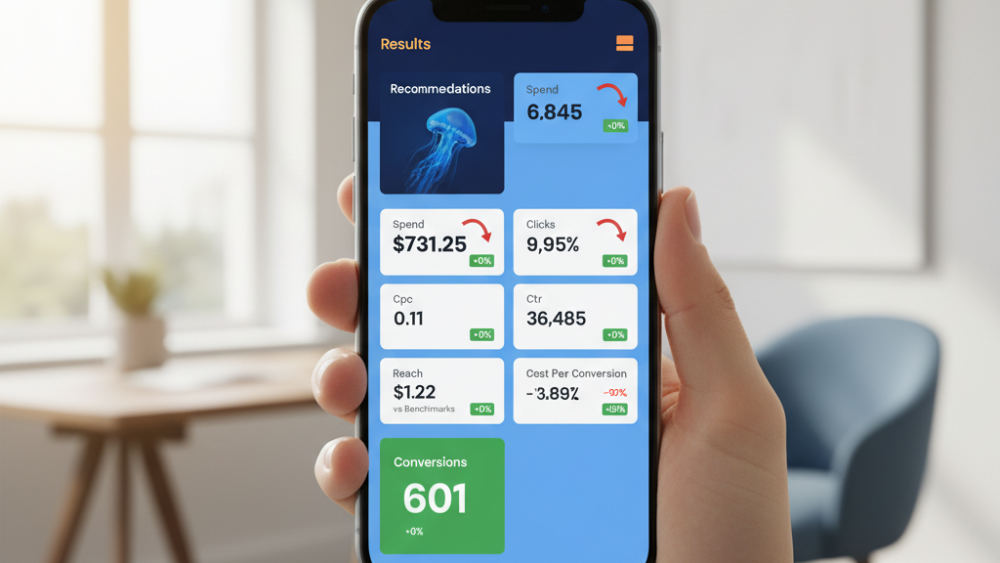
Writesonic and Copy.ai Workflow Builder, which offers workflow building capabilities for content creation, provide standalone content generation with some third party integrations through APIs and webhooks. You generate the copy inside their interface and then move it manually (or through a connector) into your actual email tool, CRM, or ads manager. The writing quality is strong but you're managing two separate systems.
Social Bee CoPilot, an AI tool for social media content creation suited for specific user needs in the social media domain, and AI Assistant Buffer, which helps with social media management and content scheduling, focus on social media scheduling with AI writing assistance built into the calendar view. You draft a week of posts with AI suggestions, schedule them, and the tool publishes on your behalf. These work well if social is your primary channel, but they don't connect to your customer database or transaction history.
AdCreative.ai Competitor Insights, an AI tool for social media content creation with a focus on competitor analysis, generates ad creative while analyzing what competitors are running across platforms. The tool scrapes competitor ads and suggests variations for your own campaigns, which you then upload manually to each ad platform. Launch Ads, an AI powered advertising management platform, takes a different path by creating, launching, monitoring, and optimizing campaigns across multiple platforms from one dashboard, with performance data flowing back into your CRM so you see which ads produced buyers, not just clicks.
The best setup puts AI where you already work instead of adding another tool to check every day. If you live in your CRM, the content generator belongs there. If you're primarily running ads, generation inside the ads manager saves the round trip.
Comparison of AI Content Creation Approaches
The right AI content approach depends on whether you need another specialized tool or one system that connects everything you already do.
| Approach | Integration Depth | Content Types | Workflow Automation | Ideal User |
|---|---|---|---|---|
| Standalone AI writing tools (Writesonic, Copy.ai) | API connections available but manual setup required | Long form blog posts, landing pages, email copy, ad variations | Limited, content exported to other tools | Content marketers who write first, distribute second |
| Social media AI tools (Social Bee, Buffer AI, Piktochart AI Carousel Maker) | Native to social scheduling only | Posts, captions, carousel content, visual ideas | Publishing schedules but not customer triggered | Social managers focused on engagement metrics |
| Integrated platform AI (Launch CRM) | Native inside CRM, email, SMS, and funnel builder | Emails, SMS, landing pages, ad copy, review requests, appointment confirmations | Full workflow automation triggered by customer behavior | Business owners who want content that immediately feeds sales sequences and customer journeys |
Standalone tools excel at long form content and blog posts but require manual export to wherever you actually publish. You get a polished article and then you have to load it into WordPress, format it, add images, and publish. The AI handles the draft. You handle everything else.
Social AI tools optimize for engagement and scheduling but live in their own silo. Piktochart AI Carousel Maker specializes in generating carousel content for social media platforms. Your posts go out on time but the tool doesn't know who bought, who abandoned a cart, or who is three days overdue for an appointment. The content is consistent but not personalized to customer actions.
Integrated platform AI generates content that immediately feeds customer journeys and automated sequences. An abandoned cart message written by AI in Launch CRM already sits inside the workflow that sends it two hours after the cart is abandoned, personalized with the product name and the customer's first name pulled from their contact record.
How AI Content Powers Your Sales Funnel and Customer Journey
Most owners think of AI content as social posts, but the real money is in email sequences, abandoned cart messages, and post purchase follow up that trigger automatically based on customer actions. Social gets attention but sequences get transactions, and sequences are where AI saves the most time because you're writing dozens of messages instead of one.
Launch CRM uses workflow automation to trigger AI generated follow up based on customer behavior, not just calendar dates. A prospect fills out a form at two in the morning and receives a personalized response sixty seconds later, written by AI, that references the specific service they asked about. The speed decides the sale more than the copy does. AI content is what makes speed automatic.
Abandoned cart sequences benefit from AI personalization that references the specific product left behind and adjusts tone based on cart value. A cart with a twelve dollar item gets a light reminder. A cart with an eight hundred dollar item gets a message that addresses hesitation and offers a phone conversation. The AI generates both and the workflow decides which one to send based on cart total.
Post purchase content keeps buyers engaged and increases repeat frequency without adding to your team's manual workload. After the first purchase the customer enters a ninety day nurture sequence that shares tips, asks for a review, suggests complementary products, and invites them back. AI writes the entire sequence in twenty minutes instead of three hours, and it runs for every customer automatically.
AI content for sales funnels includes landing page copy, lead magnet delivery emails, and nurture sequences that move prospects toward a sale. You describe the offer, the audience, and the outcome you want. The AI drafts the funnel. You edit for voice and specifics, load it into your funnel builder, and turn it on. A funnel that used to take a week to write now takes an afternoon.
Launch Data identifies anonymous website visitors and enriches their profiles so AI can reference their specific interests and behavior when generating follow up. A visitor who looked at your pricing page three times but never booked gets a different message than someone who visited once and left. The AI uses first party data to personalize each message instead of sending the same generic email to everyone.
Using AI Content With First Party Data and Personalization
Generic AI content performs like generic human content, which is to say poorly. The advantage comes from combining AI generation with your own customer data to personalize each message so it feels individually written instead of mass mailed.
A review request that says "Hi [FirstName], thanks for your recent purchase" is fine. A review request that says "Hi Sarah, we hope the navy parka is keeping you warm" is better because it references the actual product. AI writes both at the same speed, but only the second one requires integration between the content generator and your transaction history.
Launch Data identifies the anonymous visitors already on your website and turns them into named, contactable leads with enriched profiles that feed straight into Launch CRM and Launch Ads for retargeting and follow up. A visitor browses your site, leaves, and twenty minutes later receives an email addressing the exact page they viewed. That's AI content working with first party pixel data, and it converts better than any generic welcome series.
AI prompt analytics for ecommerce brands track which generated messages drive clicks, purchases, and repeat orders so you refine what works. You run three variations of an abandoned cart email, AI generates all three, and the analytics show which subject line and body copy produced the highest recovery rate. Next time you use the winner as the template and test two new variations against it.
Agentic AI systems are capable of independent action and decision making to improve checkout experiences by generating dynamic offers and reassurance messages based on cart contents, visitor history, and hesitation signals. A first time buyer hesitating at checkout sees a money back guarantee and a customer testimonial. A repeat buyer sees a loyalty discount and a faster checkout flow. The AI adapts the message to the moment, and the result is higher conversion without any manual work from you.
AI checkout integration means the content adapts in real time to what the customer is doing. Someone adds an item, pauses, and starts to leave. The AI generates an exit intent offer specific to that product. Someone returns to a cart they abandoned yesterday and the page copy changes to welcome them back and remind them why they wanted it. The technology handles what used to require a developer and a day of work.
AI Content for Advertising and Campaign Management
Launch Ads uses artificial intelligence to write ad copy variations, test headlines, and optimize creative across multiple platforms from a single dashboard. The platform generates ads based on your campaign goals and audience segments, then monitors performance and suggests adjustments in real time. This means you're not manually writing ten variations of the same headline or switching between five browser tabs to check how each platform is performing.
AI handles the repetitive work of writing those ten headline variations so you can focus on strategy and offer. The difference between a winning ad and a losing ad usually comes down to the hook and the promise, not whether a human or AI wrote the body copy. What matters more is testing fast enough to find what works before you burn through your budget.
Ad performance data flows back into your CRM so you know which campaigns produced actual customers instead of just clicks. That connection is where most businesses leave money on the table. A click means nothing if the lead never converts. You can't optimize for revenue if your ad platform and customer database don't talk to each other. Visual AI tools like Canva AI Logo Generator, which generates logos and other visual content, and InVideo AI, which focuses on video creation and editing, create supporting assets for your campaigns, though Launch Ads focuses on commerce and lead generation where the goal is a purchase or a booked appointment, not brand awareness.
When AI Content Is the Wrong Tool and What to Watch For
AI can't write content that requires proprietary expertise, specific case results, or firsthand experience only you have. If your competitive advantage comes from what you know or what you've done, AI gives you a bland starting point at best. The technology pulls from patterns it has seen before. It can't invent the breakthrough insight that makes your service worth three times what your competitor charges.
Data privacy matters when AI tools process customer lists, order history, or protected health information. You need to know where that data goes, who can see it, and whether the AI company trains its models on your business information. American built platforms like Launch Commerce keep data in the USA and under your control, which matters for compliance and trust. Most business owners never read the terms of service until something goes wrong. The time to check is before you upload your customer database.
Watch out: AI can't write content that requires your proprietary expertise or firsthand experience. Always review generated content before it reaches customers.
AI adds capacity but doesn't replace judgment. Review generated content before it reaches customers. The biggest risk isn't bad writing but bland writing that sounds like everyone else. That happens when you accept the first draft without adding your voice, your examples, and your point of view. The fix is feeding AI your specific details and voice examples so the output sounds like you, just faster.
Putting AI Content to Work in Your Business
Start with the highest volume repetitive content: appointment confirmations, review requests, and lead follow up messages. These are the messages you send fifty times a week that say roughly the same thing with minor variations for customer name, service type, or appointment time. They're also the messages where a delay costs you money because the customer books with someone else or forgets they ever inquired.
Build templates inside your CRM that include merge fields for customer name, service type, appointment date, and purchase details. Use AI to generate variations of those templates so every message feels personal without writing each one by hand. The goal isn't to trick people into thinking a human typed the message. It's to eliminate the bottleneck where one person has to manually send a hundred messages.
Start here: Begin with high volume repetitive content like appointment confirmations and review requests. Build the foundation before expanding into complex automated sequences.
Test AI generated subject lines and opening sentences against your current versions and measure open rates and click rates. Most businesses never test anything, so even basic AI optimization beats what they're doing now. The improvement comes from volume: writing twenty subject lines in three minutes instead of one subject line in ten minutes, then letting the data tell you which one works.
Expand into automated sequences for abandoned carts, post purchase nurture, and win back campaigns once the foundation is running. These sequences require more strategy because the timing and the offer matter as much as the copy. More AI tools for business can help you build out a complete automation strategy beyond content creation alone.
Frequently asked questions
What AI apps create marketing content?
AI Content Creator - Apps on Google Play is a mobile application designed to generate text content using artificial intelligence for various purposes like posts, captions, ideas, and short articles. Writesonic is a prominent AI content creation tool for generating blog posts, email copy, and ad content. Launch CRM includes AI content generation built into the platform alongside your CRM, email sequences, and sales funnels so the content flows directly into your customer journeys.
How can AI help with content creation for my business?
AI speeds up first drafts and brainstorming so you spend less time staring at a blank screen. It handles high volume repetitive content like review requests, appointment reminders, and follow up emails so your team focuses on strategy and customer conversations. AI personalizes content at scale by pulling in customer data like names, purchase history, and behavior to make each message feel individually written.
What AI content tools integrate with CRM?
Launch CRM has AI content generation built directly into the platform where your contacts, pipelines, and automated workflows live. Some standalone tools like Writesonic and Copy.ai offer API integrations with popular CRMs, though you typically have to set up the connection yourself. Integrated platforms eliminate the manual copy and paste step and let AI generated content trigger automatically based on customer actions.
Can AI content creation apps help with email marketing automation?
Yes, AI generates email subject lines, body copy, and call to action text for automated sequences like welcome series, abandoned cart follow up, and post purchase nurture. The best results come from AI that connects to your customer data so it can personalize each email based on what the recipient actually bought or looked at. Workflow automation inside platforms like Launch CRM triggers AI generated emails based on customer behavior, not just a calendar schedule.
Are AI content creation apps suitable for small local service businesses?
Absolutely, and often more valuable than for ecommerce because service businesses lose more revenue to unanswered phones and slow follow up than to bad marketing. AI handles appointment confirmations, reminders, review requests, and after hours lead responses so you never miss a potential customer. AI Workforce represents AI powered employees that handle tasks like answering phones, booking appointments, and customer conversations. Local service businesses benefit most from AI that integrates with booking calendars, phone systems, and CRM pipelines instead of just writing social posts.
How does AI content creation impact social media engagement?
Piktochart like Social Bee CoPilot and Piktochart AI Carousel Maker generate post ideas, captions, and visual content that can increase posting frequency and consistency. Engagement depends more on the strategy and audience targeting than on who wrote the post, so AI is most valuable when it frees you to focus on those decisions. Video tools like InVideo AI and Loom AI, which is used in conjunction with video messaging for content summaries or scripting, help create video content that typically outperforms text posts for engagement.
What are the privacy considerations when using AI for content generation?
If your AI tool processes customer lists, order history, or any protected data, you need to know where that data is stored and who has access. American built platforms like Launch Commerce keep your data in the USA and under your control, which matters for compliance and customer trust. Always review your AI tool's terms of service to confirm they don't train their models on your proprietary business data or customer information.
Your Next Step With AI Content Creation
AI content creation becomes valuable when it connects to the systems where you actually run your business instead of living in another browser tab. Standalone apps create more work because you still have to copy the output, paste it somewhere else, format it, and remember to send it. Launch CRM integrates AI content generation with your contacts, sales funnels, email and SMS marketing, workflow automation, and ecommerce store so nothing lives in a silo.
You can build the system yourself or have the setup installed and configured for you if you need it handling phones, appointments, and customer conversations immediately. Either way, the goal is the same: use AI to handle more volume with your current team and catch the revenue that used to fall through the cracks. Most businesses don't have a traffic problem or a product problem. They have a follow up problem and a capacity problem. AI content fixes both when it's connected to the right infrastructure. If you're ready to implement agentic AI examples that drive conversions and improve customer experience, the integrated platform approach delivers results faster than piecemeal solutions.