
AI Advertising Examples Business Owners Use in Escondido
Last updated November 16, 2026
AI advertising examples in action include platforms that write and optimize ad copy across multiple channels, predictive systems that identify your best buyers before you spend a dollar, dynamic creative that personalizes images and headlines for each viewer, and automated follow up sequences that turn ad clicks into booked appointments without human intervention.
Table of contents
- What AI Advertising Actually Does
- Real World AI Advertising Examples Across Platforms
- How AI Finds Your Target Market Better Than Humans
- The Leaky Bucket Problem: Why AI Follow Up Decides the Sale
- Risks and Limits: When AI Advertising Fails
- Getting Started with AI Advertising in Escondido
- Frequently asked questions
What AI Advertising Actually Does
AI in advertising handles three core jobs: creating the message, finding the right audience, and automating what happens after the click.
Generative AI writes ad copy and headlines tailored to each platform's character limits and audience expectations, testing dozens of variations faster than any copywriter could. One version leads with price, another with speed, and a third with social proof. The platform runs them all at once, shifts budget toward the winners, and kills the losers before you spend a dollar on creative that doesn't work.
Predictive analytics study past customer behavior to identify lookalike audiences, so your ad spend targets people statistically likely to buy instead of a generic demographic guess. The algorithm finds patterns humans miss: time of day, device type, pages visited, scroll depth, referral source, and the sequence of actions that preceded a purchase. Then it goes hunting for more people who match those patterns.
Dynamic creative optimization (DCO) assembles personalized ads in real time, swapping images, headlines, and offers based on who's viewing, where they are, and what they've browsed before. A returning visitor sees one message. A first timer sees another. Someone in Escondido gets local details. Someone out of state sees a broader pitch. Same campaign, hundreds of variations, zero manual work.
The real power isn't in the click. It's in what happens after. AI chatbots, voice agents, and automated follow up sequences catch leads the moment they express interest, answer questions at midnight, and book appointments without a human touching the keyboard. That's the difference between renting attention and owning the outcome.
Real World AI Advertising Examples Across Platforms
Launch Ads is an AI powered advertising management tool that handles 11 platforms from one dashboard and flows performance data back into Launch CRM, which serves as the central platform for managing contacts, pipelines, and automated follow up sequences that turn ad clicks into actual sales.
Launch Ads users have seen cost per lead drop from 27 dollars to 9 dollars. One business generated 40 sales in its first month by letting the AI optimize bid strategy and audience targeting in real time. The system adjusts bids every few hours based on performance, pushes budget toward the placements that convert, and pauses the ones that waste money.
AI ecommerce platforms in the industry provide automatic product descriptions and pricing updates for US online stores, rewriting descriptions based on search trends and adjusting prices dynamically when competitors move or inventory shifts. Launch Cart is an AI powered store builder that automates product management and checkouts for American entrepreneurs, connecting natively to the same CRM that manages your ad leads.
For sole proprietorship business examples, a local HVAC contractor in Escondido can use Launch AI Workforce, which provides done for you AI voice agents and receptionists that answer calls and book appointments without adding admin staff. The voice agent picks up on the second ring, asks qualifying questions, checks the calendar, and books the job while the owner is asleep or on site with another customer.
Commerce AI tools identify anonymous website visitors through first party pixel data technology and turn them into named, contactable leads that feed directly into retargeting campaigns and automated email sequences. Data enrichment tools enhance those profiles with contact details, job titles, and company information, creating a retargeting list from people who never filled out a form. You get their name, their email, and enough context to write a follow up message that feels personal instead of generic.
How AI Finds Your Target Market Better Than Humans
Target market examples that AI identifies include high intent buyers who visited your pricing page twice, past customers whose purchase anniversary is approaching, and lookalike audiences who share browsing and purchase patterns with your best clients.
AI reads signals humans miss: time spent on page, scroll depth, mouse movement, device type, referral source, and the sequence of pages visited. Someone who lands on your homepage, clicks to the service page, reads the pricing, then closes the tab scores higher than someone who bounces in three seconds. Someone who opens your email three times without clicking is signaling interest even though they haven't converted yet.
First party pixel data uses technology to identify anonymous website visitors and turn them into contactable leads with full profiles. That solves the biggest leak in most ad funnels: the 97 percent of visitors who leave without identifying themselves.
Predictive models analyze your existing customer database to find common attributes, then search ad platforms for new prospects who match those patterns, targeting people statistically likely to convert instead of broad age and income guesses. If your best customers are service business owners in Southern California who visit your site on mobile during weekday mornings, the AI finds more people who fit that exact profile and suppresses spend on everyone else.
The 16x Formula is a growth framework based on doubling leads through better targeting, doubling conversion with personalized creative, doubling purchase frequency with automated follow up, and doubling repeat buyers with win back sequences. Two times two times two times two is sixteen times the revenue. Nobody needs a miracle in one area. They need a modest, achievable gain in four areas that multiply.
The Leaky Bucket Problem: Why AI Follow Up Decides the Sale
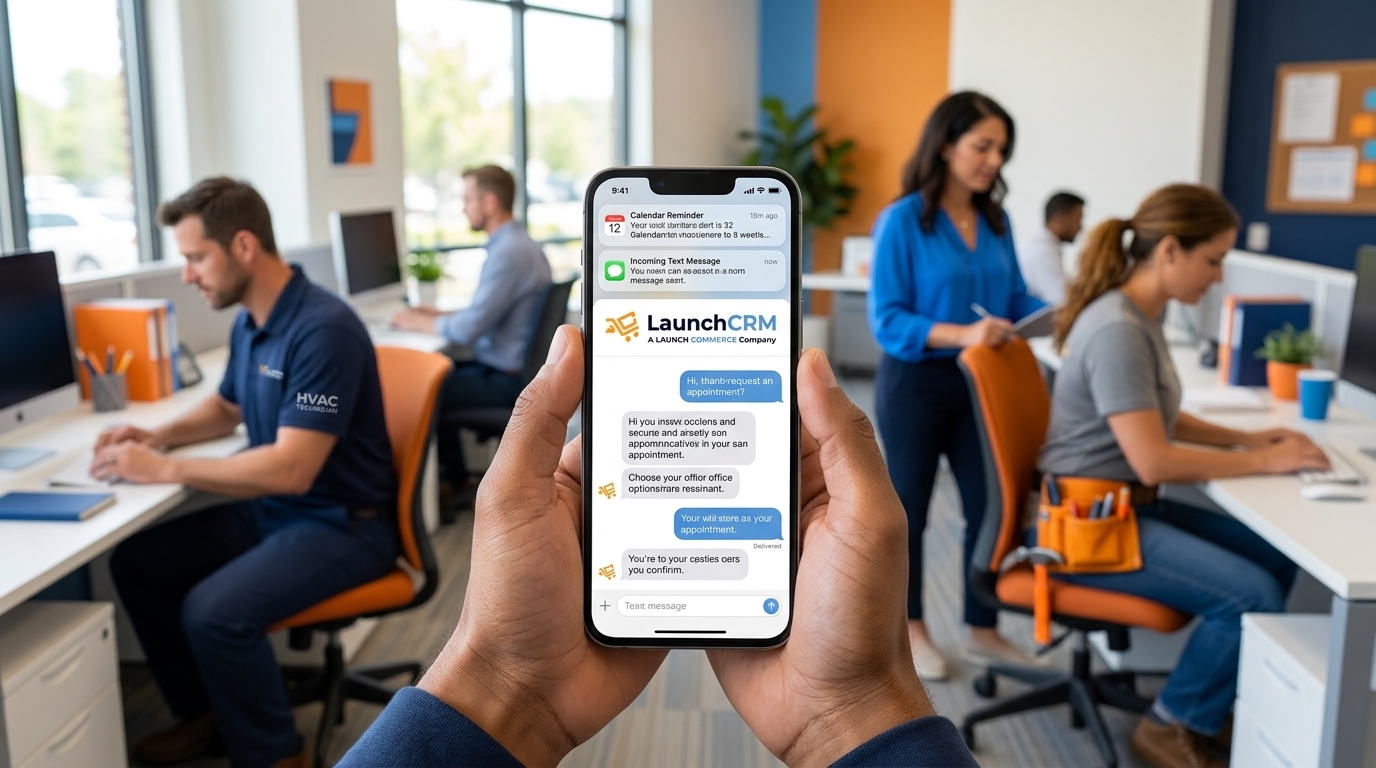
Most business owners think they have a traffic problem when they actually have a leak problem. They're pouring ad money into a bucket with four holes in the bottom: leads that never get contacted, prospects that never convert, one time buyers who never return, and past customers who are never reactivated.
Pouring AI ad traffic into a business with no automated follow up is a waste of money. You can double the clicks and still make less money because half the leads never get a response and the other half get one email that lands in promotions. Speed wins. The business that responds first usually wins the job, even when it's not the best business in town. According to HubSpot research, companies that contact prospects within five minutes are 100 times more likely to connect than those who wait 30 minutes.
Launch AI Workforce provides AI employees that answer calls, send missed call text backs, book appointments, and follow up on leads without you configuring a single prompt. For service businesses in Escondido like HVAC contractors, medical practices, and legal firms, this catches revenue that would otherwise walk to the competitor who picked up the phone. The AI voice agent answers on the second ring, qualifies the caller, checks your calendar, and books the appointment before the lead has time to dial the next number.
Launch Ads sends lead data into Launch CRM, which triggers automated email and SMS sequences, books the appointment through an AI receptionist, sends confirmations and reminders, and asks for the review after the job is done. Every step runs whether you have ten leads or a thousand, and nothing falls through the cracks when the day gets busy. The follow up is where the money is, and it's the first thing that gets abandoned when the day gets busy.
Risks and Limits: When AI Advertising Fails
AI is a mechanism and an amplifier. It makes a good offer reach more people faster and it makes a bad offer fail faster. It doesn't decide what to sell or who to sell it to.
The biggest mistake we see is running ads with no way to catch the lead after hours. Ads run at eleven at night. Owners don't. Without automated response and booking, a meaningful share of the spend is being thrown away every night. Building your entire ad strategy on rented land like Facebook without owning your list is a terminal risk. Accounts get frozen, policies change overnight, and platforms disappear.
AI can't fix a broken offer or a product nobody wants. If a hundred visitors don't buy, a thousand visitors won't buy either. You'll just find out ten times faster and ten times more expensively. Test before you invest. Run a small budget, prove the market wants it, and only then open the wallet.
A sole proprietorship is a business structure that benefits from AI by replacing manual admin tasks like confirmations, reminders, follow up, invoicing, and review requests with automation. AI adds capacity. It never replaces people. It lets the same team handle more volume and cover the hours nobody is working.
One payment processor is a single point of failure. We've seen businesses lose their merchant account overnight and go to zero because they had no backup. Payment redundancy isn't optional for ad driven businesses. If you can't take money, the best ad campaign in the world is worthless.
Getting Started with AI Advertising in Escondido
The fastest money in most businesses is already in the database. Database reactivation is the process of using AI to message existing customer lists to generate immediate cash flow with no new ad spend.
Launch CRM sends automated campaigns to past customers and old leads sitting in a spreadsheet or a dead email tool. That list is worth more than any new traffic you haven't bought yet. For broader context on how these mechanisms work in professional settings, learn more about what an AI ads company actually does.
Launch Academy is a training platform for entrepreneurs to learn AI and automation implementation, with courses covering the full ecosystem so business owners get results instead of another login they never open. The training walks through how to build the funnel, write the follow up, connect the tools, and turn on the automation that makes the rest of this work.
Real world commerce AI examples for small retailers include automated product descriptions, dynamic pricing updates, abandoned cart recovery sequences, and personalized product recommendations. The AI rewrites product pages when search behavior shifts, adjusts prices when competitors move, and sends the cart recovery text at exactly the right moment to bring the buyer back.
If you're ready to stop leaking leads and start ringing the cash register with AI, explore how AI advertising for small businesses applies these mechanisms in practice. You can also look at broader e-commerce business examples to see where these tools fit inside a complete growth strategy, then learn more about the Launch Commerce ecosystem to get started.
Frequently asked questions
What are real examples of AI advertising in action?
AI writes and tests ad copy variations automatically, targets lookalike audiences based on past buyer behavior, and personalizes images and headlines for each viewer through dynamic creative optimization. Launch Ads manages campaigns across 11 platforms from one dashboard and flows performance data into Launch CRM so you see which ads produced real customers. AI voice agents answer calls after hours, book appointments, and send automated follow up sequences without human intervention.
How do businesses use AI for advertising?
Businesses use AI to create ad copy, identify high intent audiences through predictive analytics, and automate the follow up that turns clicks into sales. Local service businesses use AI receptionists to catch missed calls and book appointments, while e-commerce stores use AI to write product descriptions and update pricing based on competitor moves. The key is connecting the ad platform to the CRM so lead data triggers automated sequences instead of sitting in a spreadsheet.
What AI advertising tools work for small businesses?
Launch Ads is built for small business owners who want to manage multiple ad platforms without hiring an agency, with AI optimizing bids and creative in real time. Launch AI Workforce provides done for you AI employees that answer phones, book appointments, and follow up on leads, specifically built for service businesses that lose revenue to unanswered calls. Launch CRM automates the follow up sequences that most small teams skip when the day gets busy, turning one time ad clicks into repeat buyers.
Which AI ecommerce automation platforms offer automatic product descriptions and pricing updates for US online stores?
Launch Cart provides AI powered product management and automatic descriptions for American entrepreneurs running online stores, connected natively to Launch CRM for customer follow up. AI commerce platforms rewrite product descriptions based on search trends and adjust prices dynamically when competitors move or inventory levels shift. The automation runs inside the same ecosystem that manages ads, email marketing, and checkout, so product updates flow through every customer touchpoint.
What are some real world commerce AI examples for small retailers?
Automated abandoned cart recovery sequences that send personalized emails and texts when a buyer leaves items in their cart, recovering revenue without manual outreach. Dynamic pricing updates that respond to competitor pricing, inventory levels, and demand signals in real time. Personalized product recommendations based on browsing history and past purchases, increasing average order value without adding sales staff.
How does an AI commerce platform differ from a standard website builder?
An AI commerce platform automates product management, pricing updates, customer follow up, and checkout processes, while a standard website builder just gives you pages and forms. Launch Cart connects the online store natively to Launch CRM, so every sale triggers automated review requests, upsell sequences, and win back campaigns. Standard builders require you to stitch together separate tools for payments, email, SMS, and automation. AI commerce platforms handle it all in one connected system.
Can a sole proprietorship use AI advertising effectively without a marketing team?
Yes. Sole proprietorship examples include local contractors, consultants, and service providers who use Launch Ads to manage campaigns and Launch AI Workforce to answer calls and book appointments without adding staff. AI replaces the manual admin tasks that solo owners skip when the day gets busy: confirmations, reminders, follow up, invoicing, and review requests. The key is choosing tools that are installed and configured for you instead of requiring prompt engineering or technical setup.